July 16, 2026
Seattle-based Dearie Law Group has joined Tamara Holder Law in representing more than 100 women in litigation against Providence-Kadlec and OB-GYN Mark Mulholland. Additional patients continue to come forward with allegations of medical and sexual abuse and ignored complaints.
Filed in King County Superior Court, the lawsuits allege Mulholland abused female patients while employed at Associated Physicians for Women (APW) and Providence-Kadlec, located in Richland, one of the Tri-Cities in Washington. The filings include allegations of unauthorized procedures, non-consensual medical treatment, inappropriate sexual conduct, and other forms of abuse. Specific allegations include performing the so-called "husband stitch," an unnecessary postpartum stitch performed for a partner's sexual benefit rather than the patient's medical care; removing fallopian tubes without consent; performing forced C-sections; and rectal penetration without medical need. The alleged conduct represents profound violations of bodily autonomy and medical ethics.
Mulholland worked as a physician for defendants from 1999 until July 2025. In April 2025, the Washington Medical Commission filed charges against Mulholland, alleging Mulholland exhibited a "pattern of conduct and lack of appropriate boundaries toward patients that falls below the standard of care."
Dearie Law Group brings extensive trial experience to the legal team, including a recent $130 million jury verdict in the wrongful death of a child at a daycare. Attorneys Ray Dearie and Drew Lombardi also earned eight placements in the 2024 Top Verdicts rankings, including a record slip-and-fall verdict and the No. 1 truck accident verdict in 2024.
"We are honored to welcome Ray Dearie, Drew Lombardi, and Aaron Dean to our team. Their experience and commitment to justice strengthen our ability to pursue accountability. We are determined to hold the defendants responsible for turning a blind eye to Mulholland's abuses of women," said Tamara Holder.
"Our collaboration with Tamara Holder Law strengthens our collective experience and resources, enabling us to effectively represent survivors and navigate the complexities of multi-plaintiff litigation," said Ray Dearie.
About Tamara Holder Law
Tamara Holder is an internationally recognized attorney specializing in women's rights and institutional abuse litigation. Founded in Chicago in 2005, Tamara Holder Law represents plaintiffs in complex, multi-plaintiff cases, with a focus on doctor-patient sexual abuse and institutional accountability. In 2024, Holder and her team secured the largest doctor-patient sexual abuse settlement in Illinois history. Holder has testified before Congress on issues affecting survivors, served as a legal analyst for Fox News Channel for nearly a decade, and is a dedicated advocate for women in recovery. For more information, visit tamaraholderlaw.com.
About Dearie Law Group
Dearie Law Group is a Seattle-based law firm representing individuals and families in complex personal injury, wrongful death, sexual abuse, and medical malpractice matters. Founded in 2008 by Raymond Dearie, the firm focuses on high-stakes litigation and providing strategic advocacy for clients throughout Washington State. For more information, visit dearielawgroup.com.
Expanding Litigation Alleges Abuse and Institutional Failures
SEATTLE, March 25, 2026 /PRNewswire/ -- Fifty-one women have filed claims against OB/GYN Mark Mulholland and Providence-Kadlec, expanding ongoing litigation over an alleged pattern of doctor-patient sexual abuse, unnecessary surgery, and institutional failures.
The plaintiffs are represented by attorneys Tamara Holder of Tamara Holder Law and their Seattle co-counsel.. The lawsuits have been filed in King County Superior Court over the past year as additional individuals come forward.
The lawsuits allege Providence-Kadlec ignored decades of complaints that included alleged unnecessary pelvic exams and anal exams, forced c-sections, and unnecessary surgeries.
Attorney Holder added, "The World Health Organization reports that up to 59 percent of women experience obstetric or gynecologic abuse, including non-consented care, verbal mistreatment, and even physical abuse. These statistics are a call to action: healthcare institutions must be held accountable when they fail to protect women and mothers."
Dr. Mulholland was employed by Providence-Kadlec from 1999 until June 2025. The Washington Medical Commission has suspended Dr. Mulholland's license to practice medicine on women as it continues its investigation into multiple patient complaints of misconduct.
Anyone who has information about Dr. Mark Mulholland or the institutions where he worked is urged to contact the legal team immediately at www.drmarkmulhollandabuse.com.
About Tamara Holder Law
Tamara Holder is an international women's rights and institutional abuse trial attorney. Her boutique practice, Tamara Holder Law, based in Chicago, focuses on sex trafficking, doctor-patient sexual abuse, and other forms of multi-plaintiff litigation. For nearly a decade, Holder was a Fox News Channel legal analyst where she created and hosted the network's only sports show. Holder has testified before Congress.
ProPublica investigated the case against Kadlec-Providence OB/GYN Mark Mulholland - Tamara Holder Law and Schroeter Goldmark & Bender represent nearly 200 women in this litigation, having recently filed 51 lawsuits.
This story was originally published by ProPublica.
The woman, 52, lay on the exam table at a clinic in Richland, Washington. Her legs were parted and propped up.
The OB-GYN, Dr. Mark Mulholland, stood between her legs, inquiring about the woman’s sex life as he had in prior visits, she wrote in a complaint filed with Washington state health care regulators.
She said Mulholland had previously asked about her enjoyment of sex and if she had a boyfriend, a strange way to learn about a patient’s sexual activity, she thought. But this was her last checkup after her hysterectomy and the last time she expected to see Mulholland.
“Do you masturbate?” Mulholland asked the woman during their final appointment, according to her complaint.
The question shocked her. She wrote that Mulholland explained he wanted to “make sure the nerves were intact.”
Then, the woman wrote, he inserted his fingers into her vagina and pumped his hand back and forth in a way she said felt “sexual and not medical.”
“Does that hurt?” the woman said Mulholland asked her, before ending their visit by saying “the playroom is open” — a comment she interpreted as Mulholland clearing her for sexual activity.
The woman said she left the room in shock. She made her way to the parking lot of the Kadlec Clinic-Associated Physicians for Women, climbed inside her car and sat, incredulous, she said in an interview with KUOW and ProPublica. What happened felt terribly wrong, she said.
Mulholland did not respond to requests for comment for this article after being sent a detailed list of findings by email and by letter. His attorney declined to comment.
What the woman didn’t know was that by the time of her exam in February 2025, the Washington Medical Commission had already received complaints from four other women since 2022 accusing Mulholland of sexual misconduct. And yet he was allowed to keep seeing patients throughout.
The accounts related by the women, whom KUOW and ProPublica are not naming to protect their privacy, included descriptions of Mulholland touching them unnecessarily, using sexually charged language, or performing painful or seemingly sexual pelvic exams that involved moving his fingers in and out.
The commission also gathered testimony a year before the woman’s February 2025 appointment from three of Mulholland’s colleagues with their own troubling accounts. These included hearing firsthand about or observing him telling patients they had “tight” and “pretty” vaginas, touching and slapping his patients’ legs, and aggressively pulling a patient’s pants down without permission.
Washington law allows the commission to take emergency action and suspend a doctor’s license while disciplinary proceedings are pending. The law says a suspension is defensible if it’s more probable than not that the physician poses an “immediate threat to the public health and safety.”
In Mulholland’s case, the commission did not choose suspension. Instead, it issued a formal statement of charges accusing Mulholland of abuse and unprofessional conduct in April 2025 — more than a year after the commission’s investigator submitted her reports on two of the complaints for review and 11 months after Mulholland was offered an informal settlement that he apparently did not sign.
Even after the commission declared its charges against Mulholland, he was allowed to keep practicing while the case proceeded. He saw patients as late as May, before he went on leave.
At least 84 patients have filed lawsuits against Mulholland or his employer since the state’s investigation became public. Court filings by Mulholland’s attorney, made in response to the lawsuits, have denied wrongdoing or improper conduct toward women. He also has denied the allegations made by the medical commission and is entitled to a hearing to contest them.
Emily Volland, a spokesperson for Kadlec and its affiliate, the Providence health system, said Mulholland is no longer employed by Kadlec. Volland declined to comment on the allegations against him but said via email: “We take our patient’s safety very seriously and are fully cooperating with the state in this matter.”
The lawsuits against Mulholland, Kadlec and Providence are ongoing. Lawyers for Providence and Kadlec in court filings denied allegations of negligence and wrongdoing.
While other news coverage has described the lawsuits and the commission’s actions in 2025, none has focused on how the state dealt with complaints against Mulholland during the three years before he agreed to restrictions on his license.
Washington state has faced criticism in the past for its handling of sexual misconduct complaints. A 2021 Seattle Times investigation found that in 282 cases of alleged sexual misconduct since 2009, state regulators took more than a year to impose discipline.
Several other states in recent years have dealt with their own high-profile cases of sexual misconduct involving OB-GYNs. On March 10, for instance, Columbia University in New York released a report detailing how a culture of silence at the institution had allowed OB-GYN Robert Hadden to abuse more than 1,000 patients over decades.
States like Ohio and Delaware have moved aggressively to make it easier to keep doctors accused of sexual misconduct away from patients.
In Washington, the medical commission wasn’t the only organization that allowed Mulholland to keep practicing.
A Kadlec risk management employee, through an attorney, acknowledged to the commission that the clinic had received patient complaints against the doctor and said they were investigated. (The letter did not describe the complaints but said they included “communication with patients regarding obesity.”) Mulholland’s privileges were never restricted or terminated, the statement said.
When local news stories covered the commission’s charges against Mulholland in June, it unleashed a deluge of 18 new complaints in the following three months.
In September, the commission placed restrictions on his license that prevented him from seeing female patients. Mulholland agreed pending a hearing on his case.
“They just let him keep practicing.”
A former patient of Dr. Mark Mulholland’s
Yanling Yu, a former Washington medical commissioner and a patient advocate with Washington Advocates for Patient Safety, wouldn’t comment on the Mulholland case directly. But she said it’s ethically wrong to allow a doctor facing serious allegations of sexual misconduct to continue seeing any patients while an investigation is ongoing.
“In an ideal regulatory system, if there has been enough or strong evidence to support the allegation, the doctor’s practice should be temporarily suspended or at least summarily restricted to protect patients’ safety,” she wrote in an email.
Kyle Karinen, executive director of the Washington Medical Commission, said the agency wasn’t slow to act and that it must operate under the system lawmakers created.
“I acknowledge that sometimes it takes longer than people would like, but we take that process really seriously,” Karinen said. “When we file a case and go to a hearing, we want to make sure that everybody has the opportunity to be heard on a particular topic.”
The woman who saw Mulholland in February 2025 filed a lawsuit against the clinic and a board complaint against the doctor, both in August. She said she was indignant after learning about the earlier complaints.
She said the commission should have taken those women more seriously. “They just let him keep practicing,” she said.
The first sexual misconduct allegation against Mulholland landed in the commission’s email inbox in January 2022. The author was a first-time mother who, at 41 weeks pregnant, went to have labor induced at the Kadlec Regional Medical Center.
The woman said she had hoped a female doctor would deliver the baby. But Mulholland was the on-call doctor assigned the day she arrived. When she saw that the doctor was a man, she asked if the female nurse who was there could perform her predelivery cervical check instead, according to her complaint.
Mulholland insisted, she said. (He later told a commission investigator that because the woman was having labor induced, he had to personally know her cervical dilation and consistency, whether the fetus was in breech position or if her amniotic sac was intact. He also said because she was experiencing high blood pressure, her delivery couldn’t wait to be rescheduled with a female doctor.)
“I didn’t have a choice but to trust who was supposed to be trustworthy,” the woman said in an interview with KUOW and ProPublica.
In her complaint, she said Mulholland was inappropriate. When the nurse asked her if she still had her underwear on, Mulholland joked that he still had his on too, she wrote.
During the cervical check, with his fingers inside the expectant mother, he pressed in different directions, according to her complaint. The woman said Mulholland told her he doesn’t perform exams this way because it hurts. Then he showed her what he described as the correct way, she said in the complaint.
“The cervical check was the longest and most painful one I have ever had,” she said in the complaint.
“I didn’t have a choice but to trust who was supposed to be trustworthy.”
A former patient of Mulholland’s
Three OB-GYNs, when presented by KUOW and ProPublica with the woman’s description of the pelvic exam, said the maneuver sounded unnecessarily painful.
“That sounds strange,” said Alson Burke, an associate professor at the University of Washington who teaches medical students how to perform pelvic exams. “Saying ‘I don’t do something because it hurts’ and then doing it doesn’t make sense to me.”
Commission records show that Mulholland said the allegation that his cervical exam was longer than what’s typical was absurd.
“I do try to be as careful, quick, gentle, and efficient as I can be when doing a pelvic exam whether it is for gynecology or obstetrics,” he wrote in an email to a commission clinical health care investigator. “With regards to being the most painful one she ever had, for that I am surprised as well as sorry. I pride myself on trying to be as gentle as absolutely possible. I get frequent compliments on how much less uncomfortable my exams are than most other providers, male or female.”
The nurse present during the woman’s exam told the commission it seemed “no longer or any more painful than these types of exams are typically.”
Up until that day, the patient’s pregnancy had been a joyous experience, she said in an interview with KUOW and ProPublica. She was excited to meet her daughter and picked out the outfit she’d arrive home in.
The nurse was ultimately able to line up a midwife to assist with the woman’s delivery in place of Mulholland.
But her cervical exam with Mulholland made the birth experience “worse than we could have ever imagined,” the woman, now 27, said in an interview with KUOW and ProPublica. It brought about depression and anxiety, she said.
“My daughter’s an only child, and I’m not sure if she ever will get a sibling because of how traumatic that was,” she told the news organizations.
By the end of July 2022, the new mother’s case was closed without any disciplinary action.
At the time, it was an isolated complaint in the record of a doctor who, records show, had not faced accusations of sexual misconduct with the medical commission before.
Then, a little over a year later, came another complaint, this time filed by a woman who had worked with Mulholland for nearly a decade.
According to an investigator’s report, the woman said she had worked at Kadlec Regional Medical Center for nine years and her interactions as Mulholland’s colleague had always been professional.
The complaint she filed in October 2023 concerned events she said took place when she was Mulholland’s patient. She’d had her fallopian tubes and the tissue lining her uterus removed and developed pain that was only present when she was menstruating.
On the day of her appointment, her complaint said, she’d explained all this to Mulholland when he began a line of questioning.
“Does it hurt you to have intercourse?”
“No,” she replied.
Then, the woman wrote in her complaint to the medical commission, Mulholland stood close to her and in a lower tone asked. “Not even when he’s deep inside you?”
“No,” she said she asserted.
Mulholland told the woman he needed to do a pelvic exam, according to the complaint.
While examining her, the woman wrote, Mulholland used one hand to push down on the top of her abdomen and with the other hand began repeatedly and “powerfully” thrusting his fingers into her vagina.
Burke, the associate professor of medicine at the University of Washington, said repeated “thrusting” is neither a technique she uses nor something she has ever observed.
“The reason I wouldn’t recommend it is because it could be triggering and really uncomfortable for someone,” Burke said. “Is that actually helping you gather the information? And is the patient feeling safe in the way that you are examining them?”
She said that no part of the pelvic exam should be performed in such a way that its intent could be perceived as sexual.
According to the former colleague’s complaint, each time Mulholland shoved his fingers inside, he leaned in close and asked, “Is this the same as the pain you felt?”
The woman wrote that Mulholland was “effectively holding her in place” on the exam table and she was unable to move to escape the pain. A medical assistant was nearby, she said.
After the pelvic exam, she said, the assistant left. Mulholland told the woman that she had a “great looking vagina,” she wrote, and that he usually had to use three fingers, but with her, he could only use two. Before leaving, the woman said in her complaint, the doctor asked her if she worked out and said he could tell she did.
Through an attorney, Mulholland later told the commission that he conducts all of his exams “as respectfully as possible” and that he is “very cognizant of his patient’s reactions.”
The doctor was responding to a commission investigator’s December 2023 request for his version of what happened during the woman’s visit.
That same month, a complaint from a third woman arrived.
It was three weeks before the new year when the woman went to the medical commission for help.
The patient, whose primary language is Spanish, had an interpreter join her in-person appointment virtually. A physician’s assistant had referred the woman to Mulholland to discuss a possible hysterectomy to relieve pain.
The woman later told a commission investigator that during her appointment, Mulholland entered the exam room and introduced himself. Then he lifted the paper sheet that covered her naked lower half, looked at her genital area, then looked back at her, which made her uncomfortable. Without asking her to reposition herself, he grabbed her by the butt to move her down the exam table, she said.
Mulholland’s pelvic exam was aggressive, she said in her written complaint to the commission. The investigator who interviewed her wrote that the woman said he’d moved his fingers in and out and that she felt a lot of pressure.
“I yelled at some point,” she wrote in her complaint.
A nurse was present but seemed fixated on the computer screen, the woman said.
Before the appointment ended, Mulholland said he was “eager to see” the woman’s vagina again, laughed and then said he was looking forward to reuniting with her womb, the investigator quoted the woman as saying. When the Spanish-language interpreter on the computer screen went quiet and asked Mulholland to repeat what he said, the woman wrote in her complaint, the doctor told the interpreter there was no need to relay that last message.
The woman was left in pain for 12 days after her appointment with Mulholland, she told the investigator, adding that she didn’t want others to go through what she had.
In response to this complaint, Mulholland’s attorney wrote to the commission, “at no time has he ever simply moved his fingers in and out several times with this patient or any other.”
(A separate report the woman filed with the Richland Police Department, which the department classified as a potential sex offense with “forcible fondling,” was closed in 14 days. The responding officer wrote that he hadn’t found facts to indicate a crime was committed “on the basis that the alleged incident occurred during a medical examination.”)
The state medical commission pressed ahead with its investigations into the two 2023 complaints, both of which asserted Mulholland had moved his fingers in and out during a pelvic exam.
The investigator assigned to both cases turned to Mulholland’s current and former colleagues. Two said that while some patients complained about the way Mulholland communicated with them about weight issues, they personally did not have concerns. Three other current or former colleagues, meanwhile, described problems.
“The cervical check was the longest and most painful one I have ever had.”
A former patient of Mulholland’s
Alexis Tuck, an OB-GYN who worked at Kadlec from 2017 to 2022, said in a statement to the commission that she noticed a pattern of Mulholland’s patients switching providers because they wanted anyone “except Dr. Mulholland,” and sometimes requested her.
She said that when she asked these patients about the reason behind their switch they replied:
“He grabbed my belly fat and shook it in front of my husband.”
“He called me fat and made fun of me.”
“He told me my vagina is tight during a pelvic exam.”
“He told me I have a pretty vagina during a pap smear.”
“He made a comment about my vagina being tight and I talked to my mom about him. Apparently she had a similar weird experience with him.”
Tuck told the commission that more than once, patients cried in her office while sharing their stories.
“These accounts were consistent in their tone and content, painting a troubling picture of a physician whose behavior repeatedly crossed the line of professional and ethical conduct,” she wrote to the commission.
Tuck told the commission that the woman who filed the October 2023 complaint was among those who described their experiences to her. Tuck said the woman was “visibly shaken and emotional” when she detailed what happened, which, based on Tuck’s retelling, was generally consistent with the woman’s complaint to the medical commission.
Another colleague told the commission that Mulholland once told her as a patient was leaving the office, “I bet you were skinny like her when you were pregnant,” and that another time he said he thought he’d seen her driving a BMW and that she looked “hot.” Another said she found Mulholland’s comments about overweight women disrespectful.
The claims against Mulholland were piling up.
In February and March 2024, Britta Fischer, commission investigator, submitted the 2023 cases for review.
What to do next was soon in the hands of commissioners.
The medical commission takes its guidance on how to handle allegations against a doctor from Washington statutes, which prohibit physicians from engaging in a range of behavior defined as sexual misconduct.
The law bans statements about a patient’s “body, appearance, sexual history, or sexual orientation” except for legitimate purposes of care. The law also bars behavior, gestures or expressions that could “reasonably be interpreted as seductive or sexual.”
A doctor can’t remove a patient’s gown or draping unless it’s with a patient’s consent, during emergency care or in a custodial setting.
A doctor can’t touch a person’s breasts, genitals, anus or other “sexualized body part” unless it’s “consistent with accepted community standards of practice for examination, diagnosis and treatment and within the health care practitioner’s scope of practice.”
Determining whether or not behavior is appropriate can be particularly difficult when it comes to OB-GYNs, said Emily Anderson, professor at Neiswanger Institute for Bioethics and Healthcare Leadership and Loyola University Chicago’s Stritch School of Medicine.
“They have access to our naked bodies as women, to our vaginas, to our breasts,” Anderson said. “They are allowed to do things that we don’t give other people permission to do, and that’s part of their job.”
There are standards for physical exams. The American College of Obstetricians and Gynecologists’ Committee on Ethics wrote that exams should be explained appropriately, done only with patient consent and “performed with the minimum amount of physical contact required to obtain data for diagnosis and treatment.”
State medical boards can also look to patterns of behavior.
Two of the three complaints against Mulholland from 2022 through 2023 mentioned movement in and out during pelvic exams, while all three described painful pelvic exams and comments the women considered inappropriate. Three colleagues also had described hearing about or witnessing him making disrespectful or inappropriate remarks, including one who said they were directed at her.
OB-GYNs “have access to our naked bodies as women.”
Emily Anderson, professor at Neiswanger Institute for Bioethics and Healthcare Leadership and Loyola University Chicago’s Stritch School of Medicine
Anderson, in a journal article, wrote that it’s common to find repeated, lesser forms of misconduct in the backgrounds of doctors who act egregiously.
“For example, sexual violations are nearly always preceded by boundary violations such as inappropriate comments or touching,” the article said.
Anderson and her colleagues recommended state regulators consider restricting a doctor’s license for multiple smaller offenses.
Stephanie Loucka, executive director of Ohio’s medical board, said that if patterns of misconduct exist, the process will find them — even when an OB-GYN’s actions occur under the guise of legitimate care. Ohio began its overhaul of sexual misconduct investigations seven years ago.
“If a complaint gets made, we’re going to work the fact pattern from the assumption that there might be something there, and we’re going to gather the evidence and see where the evidence takes us,” she said. “And it typically takes us clearly one way or the other.”
If there’s a threat of immediate harm in cases of sexual misconduct, Loucka said, Ohio moves “with a sense of urgency” to file an emergency suspension. She estimated it has taken the Ohio board from six weeks to nine months to do so.
In Washington, the medical commission reviewed the investigator’s reports on the 2023 cases and decided on what it considered an appropriate resolution.
It proposed an “informal way of settling” allegations against Mulholland.
A heavily redacted May 31, 2024, letter sent to Mulholland’s attorney by the commission does not reveal the terms of the settlement. But the letter said the settlement would not require an admission of “any unprofessional conduct or wrongdoing.” Although settlements appear in the commission’s newsletter with brief summaries, the letter told Mulholland that a settlement would avoid a hearing, typically a public process.
All Mulholland had to do was sign.
Months passed. Mulholland’s attorney asked for the information gathered about his client, and the commission sent it. A June 2024 deadline for him to accept the agreement passed, as did a subsequent one in August. Nothing in documents released by the commission indicates he signed — or that the commission took any disciplinary action.
Mulholland kept seeing patients.
Long before the commission’s investigator filed her report with her superiors, Mulholland’s employer had also heard repeated concerns, according to Kadlec Clinic records acquired by attorneys in a lawsuit against Providence and the clinic. The attorneys submitted the documents as an exhibit in court.
(In court filings, Providence and Kadlec denied that they were negligent or that they knew or should have known about the abuse the plaintiffs alleged.)
Kadlec’s records in the lawsuit show that the clinic conducted a 2018 human resources investigation into allegations that Mulholland had mocked a co-worker’s sexuality and religion, concluding that it was “more likely than not” the allegations were true. Afterward, the records say, Mulholland’s employer provided him “coaching.”
Kadlec’s records also say that the clinic conducted a 2019 workplace investigation into allegations that Mulholland made sex jokes and condescending remarks, displayed discrimination toward women, and challenged a co-worker who complained about him.
A labor nurse told a Providence investigator that year that Mulholland had pinched a patient’s labia while she was in labor and asked if she was hurting. A colleague told the nurse that Mulholland had done the same to another patient who was giving birth, according to the labor nurse’s account as written down by the investigator.
A different colleague reported to a Kadlec workplace investigator that a patient had disclosed that Mulholland told her to “masturbate more often,” Kadlec records say.
Separately, Tuck, the OB-GYN who worked alongside Mulholland, told a Kadlec investigator that a patient disclosed she felt Mulholland had assaulted her but that the woman didn’t report it because she felt no one would believe her.
Following the 2019 workplace investigation, Kadlec’s records say, Mulholland’s employer concluded in 2020 that he “engaged in multiple instances of inappropriate behavior” that violated the medical center’s expectations. He was placed on a “behavior agreement” and required to take harassment prevention training.
In 2022, Kadlec records show, more emails were sent to clinic leadership alleging that Mulholland was demeaning to patients and co-workers. They described a “toxic work environment” and said management failed to address employees’ concerns about the doctor.
Tuck departed the clinic sometime that same year. She later told the medical commission she left because management failed to take action against him.
Tuck raised concerns about Mulholland within an email to Chief Medical Officer Rich Meadows in July 2022, writing that patients “felt they had been insulted/assaulted” by Mulholland.
Kadlec’s records in the lawsuit show that Tuck had also told a Kadlec workplace investigator in 2019 that the clinic manager, Lisa Mallory, protected Mulholland. In the statement she later gave the state medical commission, Tuck said when she brought concerns about Mulholland to Mallory, she responded, “He’s always been like that.”
Mallory, in response to a request for comment from KUOW and ProPublica, said this statement was taken out of context. She declined to say more. Meadows, through a Providence spokesperson, declined to comment.
In June 2023, clinic records in the lawsuit say, Kadlec took a phone call from a patient who said Mulholland shoved his two fingers inside of her so hard during a pelvic exam that she felt his knuckles slam up against her vagina and anus.
“Rough, jabbing and pushing up, like he was trying to arouse me or something,” according to Kadlec’s narrative describing the woman’s complaint.
She told Kadlec that she had alerted Mulholland before the exam that her vagina was prone to tearing and that she experienced vaginal pain with as little as a sneeze or a cough.
Kadlec’s summary of the woman’s account said that after a rectal exam, Mulholland told the patient: “Well, you took that surprisingly well. It’s a good thing my fingers are small.”
The woman said her body where Mulholland touched her was inflamed for two and a half days.
When the commission eventually contacted Mallory as part of the state’s own investigation, the clinic manager acknowledged there had been complaints within Kadlec. She did not seem to give them much credence.
“Dr. Mulholland has received his fair share of complaints over the years as have all the other providers here” at the Kadlec clinic, she wrote in a statement to the state board. “From what I have observed, he cares deeply for his patients and has spent his career trying to educate women on their health. They have not always appreciated how he has done that.”
By September 2024, more than two years had elapsed since the state received its first complaint about a pelvic exam performed by Mulholland. Six months had passed since an investigator forwarded her report on two other pelvic exam complaints. That month, the commission learned of a new one.
“During examination, he said my vagina was very dry and that my husband wasn’t doing his job,” the woman wrote in her complaint.
The woman also described her interaction with Mulholland to a commission investigator. At the appointment, the woman had told a medical assistant that she was concerned about a fishy smell, she said. Upon entering the exam room, she told the investigator, Mulholland said loudly, “Hey, I heard you had a vagina that smells like fish.”
When he conducted his physical examination, the woman told the investigator, Mulholland penetrated her with his fingers and was “going in and out” and touching her clitoris.
The patient said she asked Mulholland to stop more than once. She was uncomfortable and what Mulholland was doing reminded her of her past sexual abuse, she wrote in her complaint. She said he eventually stopped.
Next, according to an investigator’s memo outlining the patient’s interview, Mulholland asked her if she masturbated and if she used sex toys or her fingers to do so. When the patient said she did not, Mulholland encouraged her to purchase some toys and to use them alone, she said. Then, according to the memo describing the woman’s account, Mulholland rubbed her shoulder and said, “You’re too young not to have good sex.”
A mandatory reporter filed a complaint supplementing the woman’s filing at around the same time.
By that time, the woman’s account brought to four the number of women asserting sexual misconduct by Mulholland since 2022. Counting a woman who reported rude behavior in a submission that was not marked as alleging sexual misconduct and that the commission closed, Mulholland had been named in six complaints.
Only 11 licensed physicians and physician assistants were the subject of six or more complaints in that time frame, the commission’s spokesperson said. As of last year, 41,256 people held this type of license in Washington.
A week after the mandatory reporter contacted the commission, Kelly Elder, a Washington Medical Commission staff attorney, sent the two pending 2023 cases back to Freda Pace, the commission’s director of investigations.
Elder asked Pace to have investigators try and reach people whose statements hadn’t been collected before.
Medical commission records show that investigator Britta Fischer also began looking into the new allegation.
Fischer’s inquiries produced statements from co-workers attesting to Mulholland’s good character and stating that they were unaware of any concerns raised by patients.
Mulholland himself, in a statement his attorney gave to the commission, said he didn’t have a “firm recollection” of the appointment the patient described in her complaint. He said he would never tell a patient anything to the effect that her husband was not doing his job. He said he addresses masturbation with patients who complain of sexual dryness or pain during sex, and he denied stroking the patient’s shoulder in a “suggestive way.”
Due to “unjustified allegations,” the statement said, Mulholland had changed the way he worked with patients. The statement said these changes included always trying to have a chaperone present instead of just during physical exams. He also started creating more physical distance from the patient during counseling and exploring “tangential issues, such as sexual health and wellbeing” only when a patient brought them up.
“Dr. Mulholland is truly sorry if his previous long-standing practice patterns have caused any patient any type of duress or anguish because of misinterpretation of what Dr. Mulholland was attempting to accomplish — excellent patient care,” the statement sent to the commission said.
Still, the commission also had the prior, adverse statements from colleagues and patients. In April 2025, the agency formally accused Mulholland of abuse and unprofessional conduct. (The allegations would later be amended to include sexual misconduct.)
Neither the medical commission nor the Washington State Department of Health, which oversees it, posted a news release on their websites. Members of the general public could have learned of the charges — if they knew to search for Mulholland’s name on the Health Department’s “provider credential search” page. Stephanie Mason, spokesperson for the commission, said the statement of charges would also go out to anyone who subscribed to quarterly email updates from the commission.
It wasn’t until a June Tri-City Herald story that the commission’s claims seemed to become widely known.
The outpouring of new patient complaints that followed echoed what the commission had already heard.
“Nobody was listening to me, and I did everything that I should have done.”
Torryn Kerley, a former patient who sued Mulholland. Kerley asked to be identified by name for this article.
Their accounts included allegations that Mulholland had peeked at their pubic hair under the sheet, physically pulled them down the exam table, used sexual language and performed extremely painful vaginal exams.
Two of the women who have filed lawsuits against Mulholland or his employers told KUOW and ProPublica they attended appointments with him after the commission had received multiple complaints and before he agreed to restrictions on his license.
One said she was angry she hadn’t heard about allegations against Mulholland sooner. After a hysterectomy, she was directed to see him every four months for a year for pap smears.
She saw Mulholland for the last time on May 1, 2025 — two days after the commission filed its allegations against him. She learned about the commission’s case after the media coverage began.
“I don’t know if I expected the lady at the counter when you’re checking in to warn you and say, ‘Hey, you’re gonna see Mulholland, and he’s had complaints,’” she said in an interview with KUOW and ProPublica. “I don’t see a company or whatever ever doing that, but it would have been nice to know. I would have picked a different doctor.”
Another woman who sued, Torryn Kerley, said she was angry at Kadlec to learn of all the women coming forward in lawsuits after she had already complained to the clinic about Mulholland.
“Nobody was listening to me, and I did everything that I should have done,” said Kerley, who asked to be identified by name for this article. “I reported it. I told people about it. I told doctors in the office about it.”
Karinen, the medical commission director, said it’s very unusual for the commission to file a statement of charges and then get dozens of complaints in the same vein against that same doctor, as happened with Mulholland.
“That’s unheard of,” he said.
Mason, the commission spokesperson, cast the arrival of the new complaints as a positive outcome of the action that commissioners took against Mulholland.
“That’s what opened the door to these women coming forward, because at that point, really not very many people had said anything at all, by comparison,” Mason said.
No date has been set yet for a hearing in which Mulholland can challenge the commission’s allegations against him.
Feb. 20, 2026
By Elise Takahama, Seattle Times health reporter
A Richland OB-GYN has been accused of medically and sexually abusing patients for years, with a state investigation and a flood of lawsuits outlining conduct ranging from invasive touching to performing major surgeries without consent.
At least 17 women have sued Dr. Mark Mulholland in King County Superior Court since August, detailing alleged instances of unprofessional conduct, verbal abuse and pelvic exams that were not medically necessary, sometimes painful and performed without gloves. The lawsuits also name Mulholland’s former employer, Providence Health & Services, headquartered in Renton, asserting that patient complaints were disregarded.
An additional 31 patients have filed lawsuits in King County Superior Court with similar allegations against Mulholland — but that solely name Providence and its Kadlec obstetrics and gynecology clinic, where he worked, as defendants.
The lawsuits come amid an investigation by the Washington Medical Commission that so far has resulted in the panel imposing restrictions on Mulholland’s medical license. Mulholland still has an active physician and surgeon license in Washington, but, per the commission, is not allowed to work with female patients while the state investigation continues.
Mulholland has not been criminally charged. Police in Richland said Thursday they are investigating.
Mulholland’s license, which he’s held for 26 years, comes up for renewal in March. It’s not clear if he will seek to renew it.
Attorneys for Mulholland did not respond to requests for comment, but have denied allegations in court documents, rejecting “any implications of negligence, liability, proximate cause.”
Providence is accused in the lawsuits of corporate negligence, and violating state discrimination and consumer protection laws. The 40 filings, with some filed by more than one patient, include plaintiff allegations from 2016 to 2025.
Emily Volland, director of communication for Providence’s Southeast Washington area, said she could not comment on ongoing litigation or the state investigation.
“We take our patient’s safety very seriously and are fully cooperating with the state in this matter,” Volland wrote in a statement.
The patients with medical malpractice claims are represented by attorneys in Seattle, and Tamara Holder, an attorney with Chicago-based Tamara Holder Law firm. In all, their teams have spoken with about 200 patients who say they were harmed by Mulholland, according to Holder.
“I hope that we can resolve this case in a way that provides a meaningful outcome for the women who have been abused,” said Holder, who went to high school in Kennewick.
Range of complaints
Patient complaints about Mulholland date back more than 20 years, but it wasn’t until the state medical board brought disciplinary charges in April that a fuller scope of the accusations against the doctor emerged.
The Tri-City Herald and other local media covered the board’s actions, leading other patients to reach out to attorneys to inquire about possible legal claims, Holder said.
In one of the lawsuits, filed Aug. 25 by Holder’s team, a patient identified as “Jane Doe 104” said Mulholland gave a “rough and aggressive” pelvic exam in 2023 that led her to scream out in pain. She told a supervisor at Kadlec’s Associated Physicians for Women clinic, the lawsuit says. The supervisor said they would look into it and call her back, but she was never contacted, the lawsuit says.
A few weeks later, the patient went to Richland police, but the department declined to further investigate. According to the case report, part of which is included in the Aug. 25 lawsuit, there was not enough evidence of a crime as the alleged misconduct “occurred during a medical examination,” an officer wrote.
Richland police Cmdr. Damon Jansen noted in an email to The Seattle Times that while law enforcement officers can investigate alleged incidents that occur during medical exams, “it is not something that happens with great frequency … due to a myriad of reasons.”
Jansen declined to elaborate on what those reasons might include.
In another lawsuit, which includes a claim of medical battery among other violations, Jane Doe 109 alleges that in 2023, she thought she would be undergoing a labiaplasty, but Mulholland ended up performing a much more major surgery — one that removed both her fallopian tubes, which left her unable to conceive. She did not consent to that procedure, the lawsuit says.
Jane Doe 110, who was 15 during her first pregnancy and when she became Mulholland’s patient, alleges he did an invasive examination without gloves. She had received hardly any gynecological care before meeting Mulholland in 2016.
It wasn’t until 2024, when she became pregnant again and started seeing a different provider for prenatal care, that she began questioning Mulholland’s behavior.
Her new provider expressed concern after the patient described his actions.
She also reported Mulholland to Richland police, the lawsuit says.
Jansen said police have not questioned Mulholland, but the department is investigating multiple allegations against him.
State inquiry
Since the Washington Medical Commission made its findings against Mulholland in April, the board has received at least 26 similar complaints about him, said Kyle Karinen, the commission’s executive director.
“That’s fairly unusual for us,” Karinen said. “I’ve worked here for a number of years and I can’t remember quite that number of complaints flowing in” after initial disciplinary charges were filed.
“That’s incredibly concerning,” he added.
The medical commission — run by 21 governor-appointed members — is housed within the state Department of Health and tasked with licensing and regulating physicians, physician assistants and certified anesthesiology assistants.
The commission’s April charges referenced reports from three patients who saw Mulholland between 2022 and 2024, during which he allegedly asked questions that made them uncomfortable and inappropriately touched them.
The commission ordered restrictions on Mulholland’s license in September.
In December, the medical commission updated its charges with accusations from six more patients alleging misconduct between 2017 and 2024. The additional patients described appointments where Mulholland allegedly instructed them to use sex toys, told them to call his personal cellphone, body-shamed them and made jokes about their vaginas, the charges say. The commission added sexual misconduct to its list of alleged violations.
The state group is reviewing four other accusations related to Mulholland, with several more “authorized for investigation” after those, Karinen said.
Mulholland has the opportunity to defend himself at an administrative hearing, where he can testify in front of a commission panel and state investigators will present evidence, Karinen said. After that, commission members will vote on what to do with Mulholland’s license.
A hearing has not yet been scheduled.
“The commission takes these cases incredibly seriously,” Karinen said. “These are a priority … and we devote an immense amount of resources into investigating these cases.”
‘Institutional failure’
In addition to bringing claims against Mulholland, Holder said the lawsuits are about “institutional failure” at Providence Kadlec.
According to the lawsuits, patients complained about him to the clinic’s staff, supervisors and its patient relations department, but felt their concerns were dismissed or ignored.
“One of the most shocking details is that after the Washington Medical Commission’s filing on April 29, (Providence) continued to allow him to work unchaperoned and without notifying patients,” Holder said.
Volland, of Providence, said Mulholland is no longer employed by Kadlec, but declined to answer questions about when he stopped practicing there.
Providence has locations in Alaska, Montana, Oregon, California and Washington.
The other lawsuits that reference Mulholland but do not name him as a defendant also include allegations of sexual abuse during medical appointments. But their claims are against Providence, Kadlec Regional Medical Center and the Associated Physicians for Women clinic, which the lawsuits argue “should have known that Dr. Mulholland was sexually abusing patients.”
Because there are separate filings against Mulholland, there will likely be multiple civil trials.
This article was published by Austin Reed at Apple Valley News on Nov 12, 2025 Updated Nov 16, 2025.
RICHLAND, Wash. — Multiple civil lawsuits are raising questions about patient safety and oversight in women’s healthcare.
The lawsuits center around a longtime Tri-Cities OBGYN, and they claim that both the doctor and the hospital system failed to protect patients. But beyond the legal fight, this is also sparking a conversation about how to rebuild trust in healthcare.
When you make an appointment with your doctor, it's about more than just your schedule. The relationship between patient and doctor should be about respect and above all, trust -- trust that you are getting information or doing things that will help you live a happy and healthy life.
But what happens when that trust is shattered
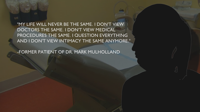
"My life will never be the same,” said a former patient of Dr. Mark Mulholland, a doctor and surgeon in Richland. “I don't view doctors the same, I don't view medical procedures the same. I question everything and I don't view intimacy the same anymore."
According to the National Institutes of Health, commonly referred to as the NIH, there isn't a lot of data that measures the extent of sexual abuse of patients by their doctors.
The reason?
Abuse goes largely underreported. Patients often times are consumed by guilt, shame, and even shock that it happened to them.
Rosanna Herrera is executive director of SARC in the Tri-Cities. SARC provides advocacy and support to survivors of crime.
"Some may even question themselves and wonder if they are overreacting,” Herrera explained. “Is this something? Should I say anything? Is my feeling valid?"
Another factor the NIH says is that even when sexual misconduct by a licensed physician is reported, very few cases are acted upon.
"That healing journey is different for each person,” Herrera said. “They may not want to go get medical care in the future. They may feel like or prolong accessing medical care because they are worried about their experience."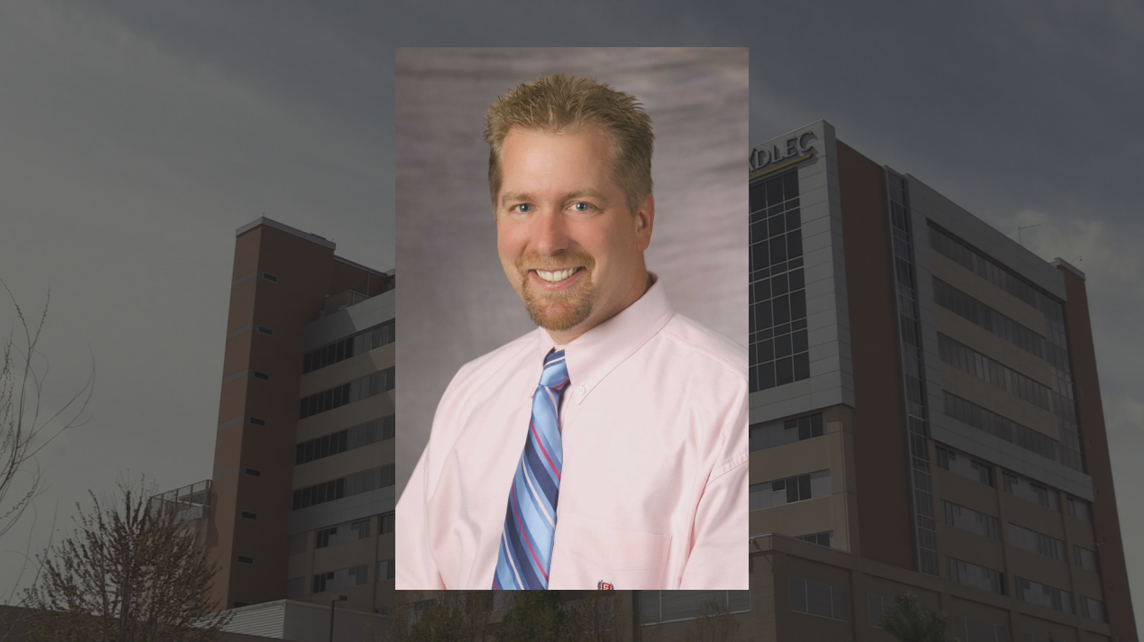

The topic has been put front and center locally after a Richland doctor and surgeon is under investigation by the Washington Medical Commission after being accused of having inappropriate boundaries and unprofessional conduct, including that of a sexual nature, toward his patients.
For more than two decades, Dr. Mark Mulholland practiced in Richland and was affiliated with Kadlec Regional Medical Center and its Associated Physicians for Women Clinic.
Since July, dozens of women have filed civil lawsuits accusing him of sexual misconduct and performing procedures without consent.
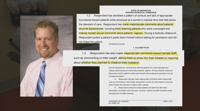
According to the statement of charges from the Washington Medical Commission Dr. Mulholland is accused of commenting about patients' bodies such as “body shaming” them for being overweight, or making sexual comments about body parts like their breasts and vaginas.
Patients say Doctor Mulholland would also comment about their sexual activity at length that didn't relate to a medical purpose and some patients even accuse him of touching, rubbing, or grabbing them inappropriately.
The women involved in these lawsuits say their experiences left lasting trauma. Those claims are now part of the civil filings.
"I tend to be vigilant more so now,” said another former patient. “I've done enough work to understand that this experience isn't isolated."
Attorneys representing the women say these accounts reflect warning signs seen in other states.
I just settled the largest doctor–patient sexual abuse case in Illinois’ history,” said attorney Tamara Holder, who represents some of the former patients of Dr. Mulholland. “My dad lives in Richland. He sent me the article about Mulholland and my phone went off the hook.”
Holder and co-counsel have filed multiple suits arguing the healthcare system failed to protect patients.
It's not just Doctor Mulholland under fire. It's also Kadlec Regional Medical Center. Attorneys for the women say the hospital failed to protect patients and the state medical commission says complaints made about Dr. Mulholland's behavior toward patients and staff were often rationalized, normalized and minimized, meaning patients say they weren't taken seriously.
Kadlec Regional Medical Center declined to comment on the pending litigation, but confirmed Dr. Mulholland is not currently practicing at their clinic.
Dr. Mulholland has not been criminally charged. We asked the Richland Police Department if it has an active investigation regarding Dr. Mulholland. They did not provide specific records but did tell us some records we requested are part of an active investigation.
A 2016 nationwide investigation by the U.S. National Practitioner Data Bank found that for the thousands of medical board orders for doctors who were disciplined for having a sex related offense of a patient since 1999, more than half of them were still licensed to practice.
Furthermore, the same analysis shows that medical boards did not discipline 70% of the physicians who had peer-review sanctions or malpractice payments made on their behalf due to sexual misconduct.
Advocates say even as these cases move through civil court, there’s an urgent need to rebuild trust in healthcare.
"When survivors come to us, they’re often scared and unsure where to start," Herrera said. "We connect them to counseling, legal advocacy, and medical accompaniment so they don’t have to face the system alone."
Statewide, Washington now requires written consent for pelvic exams on unconscious patients. Hospitals are also reinforcing chaperone policies and staff training.
"I'm not just in this for myself,” a former patient of Dr. Mulholland’s said. “I'm in this to speak up for the women who don't want to come forward. Who don't want to speak up. Who are afraid to speak up. Who did speak up but got ignored. Whose complaints somehow disappeared. I want to be all those people's voice."
Bottom line, these lawsuits are about more than one doctor.
They’re about accountability, trust and making sure patient safety is never just a policy on paper.
SARC says anyone who believes they’ve experienced sexual misconduct in a medical setting can call their 24-hour confidential hotline at 509-374-5391.
The lawsuits against Dr. Mulholland are still pending.
The Washington Medical Commission has ordered Dr. Mulholland to restrictions in his practice. He is not to engage in the practice of medicine with any biologically female patients or those who identify as female, including in a consulting role.
Dr. Mulholland's license to practice is currently active.
According to a recent article by the Tri-City Herald, the Washington Medical Commission has issued an interim order prohibiting Tri-Cities OB-GYN Dr. Mark Mulholland from treating any female patients amid mounting allegations from more than 100 women who say he sexually abused them under the guise of legitimate medical care. Under the agreement, Mulholland may not provide care to women in any capacity until the licensing charges are resolved.
While Mulholland did not admit or deny the allegations, the Commission’s charges describe a disturbing pattern of behavior between 2022 and 2024, layered on top of more than two decades of patient complaints. Allegations include inappropriate comments about women’s bodies, sexually suggestive remarks, aggressive and unnecessary pelvic exams, and other abusive conduct. According to the Commission, complaints were repeatedly “rationalized, normalized, and minimized,” leading to years of women’s concerns being dismissed by Providence St. Joseph and Kadlec Regional Medical Center.
The licensing order comes as civil and criminal actions continue to mount. At least 18 lawsuits have been filed in King County Superior Court, with patients alleging sexual assault, misconduct during exams, and even forced sterilization. Two criminal complaints have also been filed with the Richland Police Department.
Patients represented in these lawsuits describe a consistent pattern of abuse under the guise of legitimate medical care. Allegations range from inappropriate sexual comments during exams to physical assault, and even cases of forced sterilization. Despite repeated complaints to Kadlec Regional Medical Center and its parent company, Providence, patients say their concerns were ignored or dismissed.
Patients describe a consistent pattern: abuse disguised as medical care, coupled with institutional negligence that allowed Mulholland to continue practicing. These lawsuits aim to hold both Mulholland — and the institutions that enabled him — accountable for decades of harm. And as the cases progress, more women continue to come forward with their stories.
If You Have Information:
If you or someone you know has been mistreated by Dr. Mulholland, we encourage you to reach out to SGB and tell your story. Time to come forward may be limited.
Jane Doe 105 accuses Dr. Mark Mulholland of removing her fallopian tubes without her knowledge; Providence and Kadlec ignored her complaints
SEATTLE - Jane Doe 105 is the latest to file a new lawsuit amid mounting allegations against Dr. Mark Mulholland, a Tri-Cities OB-GYN who practiced for over 20 years at Providence St. Joseph Health and Kadlec Regional Medical Center. Ms. Doe is represented Tamara Holder Law in Chicago.
Jane Doe 105 met Mulholland after being admitted to Kadlec Hospital in 2016 due to severe concerns around her pregnancy, including hypertension and pre-eclampsia, which compromised both her and her unborn child’s health and safety.
Ms. Doe recalls a nurse suggesting tubal ligation as her medical team prepared to deliver her baby via caesarean section. She was reassured that a tubal ligation, more commonly known as “getting your tubes tied” was an entirely reversible procedure, as Ms. Doe had expressly stated she was interested in growing her family further following this pregnancy.
During the procedure, Ms. Doe recalls hearing a nurse over the privacy curtain ask Mulholland why he was performing the tubal ligation in that manner – Mulholland responded, “Insurance pays more this way.”
Following the procedure, Ms. Doe experienced severe complications, including irregular periods, hot flashes, and extreme fatigue, all symptoms consistent with menopause and not expected after a standard caesarean section or tubal ligation.
Nearly ten years later in 2024, Ms. Doe was ready to continue growing her family. After meeting with a fertility specialist, Ms. Doe and her husband’s worlds were turned upside down. The specialist informed them that she would not be able to reverse her tubal ligation, as Mulholland had entirely removed her fallopian tubes. Ms. Doe was left sterilized against her will by Mulholland.
Ms. Doe complained to the hospital, but her complaints were ignored.
Holder added, “This case reveals how a healthcare institution gave a male doctor unfettered power over and access over hundreds of female patients’ bodies over dozens of years. Due to Mulholland’s alleged abuse, our client now lives with the irreversible consequences. We will not rest until we have held every person and institution accountable for turning a blind eye to Mulholland’s conduct.”
Jane Doe 105’s lawsuit accuses the defendants of violating the Washington Law Against Discrimination, corporate negligence by the hospitals, battery, and intentional infliction of emotional distress.
If you or someone you know has information about Mark Mulholland or the institutions where he worked, please reach out as soon as possible. Unfortunately, the amount of time to come forward is limited.
To learn more tamaraholderlaw.com/.
Another Case Alleges Providence and Kadlec Ignored Patient Complaints of Abuse
SEATTLE – Following two similar sexual abuse lawsuits, Jane Doe 102, represented by Tamara Holder of Tamara Holder Law in Chicago, has filed a lawsuit in King County Superior Court. The complaint contributes to the growing number of female patients coming forward with allegations of physical abuse or sexual abuse by Mark E. Mulholland, a Tri-Cities OBGYN who worked for Providence St. Joseph Health and Kadlec Regional Medical Center, in Richland, Washington, from 1999 through June 2025.
Jane Doe 102 alleges that during an appointment in 2022, Mulholland explicitly asked her about her sex life and noted in her chart that she was a lesbian “and has never been in relationships with men.” During the appointment, a pre-operative meeting before Jane Doe 102’s hysterectomy, Mulholland performed a pelvic “exam” without informed consent and without explaining its purpose. Shoving his fingers inside her, he said, “You’re really tight in there.”
According to Jane Doe’s lawsuit, she worried that if she immediately complained, she risked affecting her upcoming medical care which included a hysterectomy. After surgery, however, she reached out to multiple people within the hospital’s hierarchy, including its CEO, and yet she received no response.
“Providence and Kadlec claim to be ‘the leading health care organization in the region’ while enjoying not-for-profit tax-exempt status. And despite allegedly being “committed to its mission of providing safe, compassionate care,” we have heard from hundreds of women who say this institution has chosen profits over female patient safety. ” Holder added
Jane Doe 102’s lawsuit accuses the defendants of gender-abusive conduct, failure to protect patients, and institutional negligence.
If you or someone you know has information about Mark Mulholland, OBGYN, or the institutions where he worked, please reach out to tamaraholderlaw.com/ or SGB as soon as possible. Unfortunately, the amount of time to come forward is not unlimited.
To learn more about the firms’ work representing survivors of abuse and discrimination, visit: tamaraholderlaw.com
Growing Number of Female Patients Allege Providence and Kadlec Ignored Complaints of Doctor Sexual Abuse
SEATTLE – A new lawsuit filed in King County Superior Court by Jane Doe 101, represented by attorney Tamara Holder of Tamara Holder Law and Washington co-counsel adds to the mounting allegations of sexual abuse and gender-based discrimination against Tri-Cities OB-GYN Mark Mulholland.
Jane Doe 101 alleges that in 2022, after surgery to remove an ovarian cyst, Mulholland subjected her to a painful and unnecessary pelvic “exam” at Kadlec Clinic, in Richland, where he shoved his entire hand inside her vagina without informed consent or an explanation. When she cried out in pain, Mulholland laughed, withdrew his hand, then said, “I will only use two fingers,” before continuing the invasive “exam.”
The complaint further alleges that Mulholland ignored Jane Doe’s medical needs, made dismissive comments about her medical concerns, and exploited his position of trust as her first gynecologist. Jane Doe 101 revealed that she did not recognize the conduct as sexual abuse until recently, when she learned that Mulholland was under investigation for assaulting other patients.
Jane Doe 101’s lawsuit signals a pattern of misconduct stretching back more than two decades. Since as early as 2003, Providence and Kadlec began receiving complaints about Mulholland engaging in suspicious behavior including unnecessary, and gloveless pelvic “exams;” as well as fat-shaming and abusive language yet the institutions allowed him to continue seeing patients until June of this year.
“As a Kamiakin graduate myself, these cases hit close to home,” added Holder. “Our clients were failed twice: first by their doctor, then by the very institutions that promised safe, respectful care. We are devoted to obtaining justice for our clients, and to exposing how Providence and Kadlec profited off Mulholland’s alleged abuse rather than protecting the community.”
Jane Doe 101’s lawsuit accuses the defendants of sex-based discrimination, failure to protect patients, and institutional negligence.
If you or someone you know has information about Mark Mulholland or the institutions where he worked, please reach out to tamaraholderlaw.com/ Unfortunately, the amount of time to come forward is not unlimited.
To learn more about the firm's work representing survivors of abuse and discrimination, visit tamaraholderlaw.com/


