No matter the situation, sexual harassment is a heinous act that can impart everlasting trauma on the victim, not just from the act itself but the lack of justice. Many cases don’t make it to court because many think, “Will my case pass for sexual harassment in a court of law?”
While not every case may legally count as sexual harassment, you should always report situations that make you feel uncomfortable or unsafe. However, let’s take a closer look at the legal definition of sexual harassment for clarification.
The legal definition of sexual harassment extends beyond mere inappropriate behavior, encompassing a range of actions that can significantly impact an employee’s mental health and sense of safety.
Quid pro quo harassment occurs when someone with actual or perceived authority ties a job benefit, such as a promotion or raise, to the acceptance of sexual advances or conduct. Hostile work environment harassment involves unwanted sexual conduct that is so severe or pervasive that it produces an intimidating, hostile, or offensive work environment.
Sexual harassment can manifest in many forms, including, but not limited to, unwanted sexual comments, jokes, gestures, or use of sexually explicit materials. It also includes actions like touching or blocking someone’s movement, and visual harassment, such as displaying inappropriate images or sending suggestive messages via email.
It’s crucial to understand that the perception of the behavior—whether unwelcome or offensive—plays a key role in categorizing actions as harassment. However, this perception does not necessarily mean that you fully consented if you were forced or pressured to comply.
We can categorize sexual harassment into three main types: verbal, non-verbal, and physical. Verbal sexual harassment includes comments about someone’s body, sexual propositions, or sexually suggestive jokes that make the workplace uncomfortable for the victim. Non-verbal harassment might involve inappropriate gestures, leering, or displaying offensive pictures or messages. Physical harassment includes any unwanted touching, physical interference with normal work, or any physical intimidation or assault. However, one can also consider unwanted sexual touching to be sexual assault.
Looking at the legal definition of sexual harassment in these plain terms helps build an awareness, in and outside of work, that protects everyone and arms the public with the right knowledge. Contact the law firm of Tamara N Holder today if you’ve experienced sexual assault and need any form of legal advice on how to receive justice. We have a fighting force of respectful, informed, and knowledgeable sexual harassment attorneys dedicated to upholding and protecting your rights.
Foundational principles underpin the ethical and legal relationship between medical professionals and their patients. One of these critical pillars is the concept of informed consent. What does this phrase mean in a medical context?
This concept respects the patient’s autonomy and right to make decisions, making them active participants rather than passive recipients in their medical care. Dive into what informed consent means to understand your rights as a patient.
Informed consent is the process in which a patient receives and understands all the necessary information about a medical procedure or treatment from their healthcare provider. This includes details about the benefits and risks associated with the procedure, alternative treatments, and the consequences of opting out of treatment.
The goal is to ensure patients can make an educated decision about their health based on a comprehensive understanding of their options. After receiving all the necessary information, the patient can give their voluntary agreement to proceed with the suggested medical intervention. This process not only protects patients’ rights but also fosters trust and transparency between patients and medical professionals.
The purpose of informed consent goes beyond a mere formality before medical procedures; it’s a fundamental patient right and a core aspect of patient-centered care. Informed consent empowers patients by giving them control over their own medical decisions.
Patients can ask questions, express concerns, and consider their values and preferences regarding the proposed medical treatments before agreeing to them.
Now that we understand what informed consent means in a medical context, you might wonder about the requirements for obtaining it. To legally and ethically secure informed consent from a patient, healthcare professionals must follow a protocol. First, the applicable medical professionals must communicate clearly and without medical jargon to ensure the patient fully understands.
The healthcare worker must also ensure the patient has the capacity to make the decision, meaning they are of sound mind and able to understand the information presented. Finally, the consent must be voluntary, without any form of coercion or undue pressure. Documenting this consent, often through a signed form, provides a record that the patient agreed to the procedure after understanding all relevant details.
A good doctor-patient relationship requires explicit and consistent communication in order to be upheld. In instances where communication is purposefully withheld or a medical professional abuses their power over you, this can constitute abuse or even assault.
Any sexual contact that is performed without explicit consent and with the pressure of coercion is sexual assault. If you’re ready to obtain justice and ensure aggressors don’t go unpunished, regardless of their position of power, contact the Law Firm of Tamara N Holder today. Our patient sexual assault lawyers will fight to protect your rights and make your voice heard. Together, we can create a safer and more respectful healthcare system for everyone.
Despite significant advancements in societal attitudes and legal protections for LGBTQIA+ individuals, many continue to encounter workplace challenges and disparities. Among these challenges is a concerningly high rate of sexual harassment.
This phenomenon isn’t just a matter of interpersonal conflict but a systemic issue that underscores the need for more inclusive workplace policies and cultures. We first need to understand the root cause and look further into why LGBTQ employees face high rates of sexual harassment to combat this issue and create actionable strategies.
We must first understand what sexual harassment is before we take a close look at some of the reasons why LGBTQIA+ employees may face higher rates of sexual harassment. Sexual harassment in the workplace involves unwanted sexual advances, requests for sexual favors, and other verbal or physical harassment of a sexual nature. It also includes offensive remarks about a person’s sex, sexual orientation, or gender identity.
It’s important to recognize that sexual harassment is not limited to actions that are overtly sexual. Rather, it can also encompass any behavior that demeans or humiliates someone based on their sex or sexual orientation.
The unfounded belief that LGBTQIA+ individuals are hypersexual is one prevalent stereotype that exacerbates the issue of sexual harassment. This offensive, dehumanizing stereotype that these individuals are promiscuous may encourage predators and aggressors to ask for sex and sexual favors or even go so far as to enact sexual abuse.
We cannot truly protect our LGBTQIA+ employees without making serious, concerted efforts to educate employees on these stereotypes and root out predators and inappropriate behavior. It’s also vital not to force the victims to become educators of their perpetrators.
Due to the hypersexual, promiscuous stereotypes, coworkers may have the notion that asking probing questions is appropriate. These conversations are inappropriate in any scenario, regardless of whether an individual’s intent was curiosity or to engage in more lighthearted banter.
This behavior contributes to discomfort and perpetuates an environment where LGBTQIA+ employees feel under constant scrutiny. Sensitivity training regarding the LGBTQIA+ community becomes a necessity in these cases, and employers should pair it with sexual harassment training.
Being a vulnerable population is one of the main reasons why LGBTQIA+ employees face such high rates of sexual harassment. Vulnerable populations include the LGBTQIA+ community, children, older adults, and people with varying disabilities.
These populations are much more likely to be at a general disadvantage regarding physical, mental, and social health. As a result, members of the LGBTQIA+ community are much more vulnerable to harassment in general, including harassment of a sexual nature.
Others Might Try To Pass Off Insensitive Comments or Questions As Jokes
Attempting to dismiss insensitive comments or inquiries as mere jokes is a common occurrence in the workplace, especially toward LGBTQIA+ individuals. This defense often masks the underlying prejudices and perpetuates a culture that considers “casual” discrimination acceptable.
Such actions contribute to feelings of alienation and undervalue the seriousness of the disrespect, whether intended to be humorous or not. Organizations must make clear that humor at the expense of someone’s identity is unacceptable and educate employees on the impact their words can have.
A lack of familiarity with the LGBTQIA+ community often leads to misunderstandings and inadvertently inappropriate behaviors at work. Some coworkers, without intending harm, may not realize that certain comments or actions can be offensive or hurtful. This gap in understanding underscores the need for comprehensive diversity and inclusion training that covers the nuances of sexual orientation and gender identity.
Such training should aim to educate all employees about the LGBTQIA+ community, dispel common myths, and provide clear guidelines on respectful behavior. Creating an environment where everyone is informed can significantly reduce instances of unintentional harassment and build a more inclusive workplace culture.
It’s also important to consider the opinions of LGTBQIA+ employees. What are their experiences? What do they believe the training should cover? Is the training comprehensive and accurate, or outdated and offensive? Asking these questions before a training session can incorporate important feedback and opinions without putting them at risk of having to teach or engage with an aggressor.
Despite the increasing awareness and legal advancements aimed at protecting LGBTQIA+ individuals in the workplace, many employees are still uninformed about their rights and the protections available to them. This lack of knowledge can lead to feelings of powerlessness and vulnerability when facing discrimination or harassment.
Employers must make information about anti-discrimination laws and company policies easily accessible to all employees. They can do so by including this information during onboarding training and providing educational pamphlets, showing individuals how to engage with Human Resources. Workplaces can create a safer and more supportive environment for everyone by ensuring everyone is aware of these protections.
Now that we know why LGBTQ employees face high rates of sexual harassment, what are some actionable strategies companies can employ? Cultivating an inclusive culture that celebrates diversity and actively combats prejudice is a great start. As mentioned, this cultivation involves implementing comprehensive diversity training programs and consistently updating them.
Employers must establish clear and strict anti-discrimination policies and communicate them to all employees, ensuring they know there’s a company-wide zero-tolerance stance against harassment. Additionally, creating a supportive system for reporting issues without fear of retaliation is essential. This could include anonymous reporting channels and appointing diversity officers who can sensitively address concerns.
Finally, employers should ensure that company benefits and policies do not discriminate by gender or sexual orientation, offering equal support and recognition to all partnerships and families. Through these actions, workplaces can become safe, respectful, and empowering spaces for LGBTQIA+ employees.
Through these concerted efforts, we can build a professional world that celebrates diversity, promotes equality, and protects the rights and dignity of every employee, irrespective of sexual orientation or gender identity.
Let the Law Firm of Tamara N Holder help if you want to uproot sexual harassment in your workplace, or if you’ve been the victim of it. With fiercely dedicated sexual harassment lawyers, we have the experience and determination to fight for your rights.

No matter what healthcare center you attend or work at, patient safety and security should be a priority for hospitals and healthcare providers. Thankfully, advancing technology presents many solutions to enhance patient safety and ensure a safer healthcare environment. Through this article, we’ll explore how hospitals and healthcare institutions can use technology to prevent patient abuse.
Digital health technologies, such as wearable devices and remote monitoring systems, are transforming patient care. These advanced tools enable healthcare professionals to continuously monitor patients’ real-time health metrics, regardless of location.
Wearables can track vital signs, detect falls, and even monitor sleep patterns, providing a comprehensive overview of a patient’s health status. Remote monitoring systems, on the other hand, can ensure patients are receiving proper care within healthcare facilities, alerting staff to any signs of distress or deviation from prescribed care protocols.
EHRs offer an unparalleled level of transparency and accountability by maintaining a digital trail of every interaction between patients and healthcare providers. This digital documentation ensures hospitals can quickly identify and address any untoward incident or deviation from standard care practices.
Furthermore, EHRs facilitate seamless communication among the medical team, allowing for a coordinated and comprehensive approach to patient care. This information integration across various departments ensures that all healthcare professionals are aligned in their treatment strategies, further safeguarding patients from neglect or abuse.
Biometric authentication systems represent a significant technological advancement in protecting sensitive patient information and ensuring that only authorized personnel can access it. These systems use unique physiological characteristics, such as fingerprints or eye scans, to offer a highly secure and nearly foolproof method for controlling access to sensitive information.
This level of security helps prevent unauthorized access and potential abuse and bolsters patient confidence in the healthcare system’s ability to protect their privacy.
Installing security cameras in strategic locations within healthcare settings acts as a powerful deterrent against abusive behavior. These cameras keep a constant, vigilant eye over patient care areas, hallways, and other common spaces, recording all interactions. This discourages potential perpetrators and instills a sense of safety among patients and their families.
Furthermore, video footage from security cameras can be invaluable in investigating complaints or incidents, offering clear, unbiased evidence of events. It’s essential, however, to implement such security measures with strict privacy policies and protocols to protect patient confidentiality and dignity. Ultimately, the thoughtful placement of security cameras should complement existing technological safeguards, reinforcing a comprehensive strategy that protects patients.
Using technology to prevent patient abuse can tremendously help hospitals and other medical facilities prioritize patient safety. However, technology sometimes isn’t enough to protect patient rights.
If you suspect a patient has been the victim of abuse or you suspect there may be an issue with abuse in your facility, contact the doctor sexual assault lawyers at the Law Firm of Tamara N. Holder. We specialize in representing victims of doctor-patient abuse and will fight tirelessly to protect their rights.
The ability to foster an environment of trust and encourage open communication lies in the fundamental pillar of attorney-client privilege. It’s a legal right that prevents attorneys from being compelled to disclose their clients’ secrets to third parties, including courts.
This ensures that individuals can seek legal counsel without fear of exposing their confidential information. If you want to learn more about what attorney-client privilege actually means, let’s dive into the definition and explore its nuances.
Attorney-client privilege is a legal concept that protects communications between clients and attorneys. This means that your lawyer can’t disclose anything you discuss with them with the intention of seeking legal advice without your permission.
The privilege covers face-to-face meetings, phone calls, emails, and even some written communications related to seeking legal advice. It’s crucial to remember that this privilege takes effect the moment you begin your consultation with a lawyer, regardless of whether you have formally hired the lawyer. This protection enables you to be completely honest with your legal representative without fearing someone could use your information against you in court or elsewhere.
For attorney-client privilege to apply, several key elements must be present. First, the communication must be directly between the client and the attorney or their representatives. This includes any assistants or team members under the attorney’s supervision. Second, the communication must be for the purpose of seeking, obtaining, or providing legal advice. Casual conversations not related to legal advice are not protected.
Third, the client must intend the communication to be confidential. This means taking reasonable steps to ensure privacy, such as speaking privately or using secure methods of communication. You shouldn’t expect to chat publicly on social media with your attorney and blame them if information spreads. Lastly, the privilege remains unless the client waives it explicitly or by sharing the privileged information with a third party not covered under the attorney-client privilege.
Now that we know what attorney-client privilege actually means, how does this differ from confidentiality? While they might seem similar, they serve different purposes and are governed by distinct rules. Confidentiality is a broader ethical obligation for attorneys, requiring them not to share any information related to the representation of a client. This duty persists even after the legal representation has ended or if the attorney-client relationship never formally began.
On the other hand, attorney-client privilege is a legal right that specifically protects the confidentiality of communications between a client and their attorney. Unlike confidentiality, which an attorney must maintain unless the client consents to disclosure, a client can waive attorney-client privilege, allowing the attorney to disclose protected communications.
Understanding these nuances can profoundly impact the effectiveness of legal representation and is essential for those who want to fully leverage this protection in their legal consultations.
If you’re in need of employment law consultation, The Law Firm of Tamara N Holder is dedicated to upholding this privilege and ensuring the confidentiality of all attorney-client communications. When you work with us, you can trust that your information will be protected and treated with the utmost care, respect, and discretion.
When people think of Title IX and its protections, the most immediate association they usually make is the incredible progress it helped create in women’s sports. While this progression is absolutely vital, it only captures a very small portion of what Title IX protects and what it can do.
The full spectrum of Title IX’s impact stretches far beyond women's sports, and it certainly stretches far beyond simply protecting cis-gendered women. Ultimately, under its prohibitions against sex discrimination, it also covers discrimination against gender and the spectrum of gender identities. So, what does this mean for trans students, and how does Title IX protect them?
Trans people of all ages exist and deserve protection. Though we may associate Title IX with high-school or university-level issues, schools from kindergarten through higher education must adhere to this law. Under Title IX, discrimination based on sex or gender in any educational program that receives federal funding is strictly forbidden.
Title IX's commitment to fairness in education means that it also opposes harassment stemming from non-conformance to traditional gender roles. If an educational program refuses to address gender identity-based harassment or is the cause of it, it is in direct violation of Title IX. For example, if a federally funded school were to force a trans male to wear a skirt as part of the school uniform, the facility could end up in serious legal trouble.
As mentioned, all federally funded education programs must adhere to Title IX. Beyond its ability to protect trans students of all ages, Title IX also ensures everyone has equal opportunities in the facility's programs and activities. This can include, but is not limited to, afterschool clubs, tutoring programs, athletics, and more. It also requires schools to offer the necessary accommodations that respect students’ gender identity, such as access to bathrooms and locker rooms that correspond to their gender identity.
Title IX emphasizes the importance of keeping transgender students' identities confidential and private. Schools must ensure a student's gender identity and related personal information are handled carefully.
Schools cannot disclose a transgender student’s personal information without their consent. This means that the employees who are there to protect the student (such as a counselor or teacher) are informed of the student’s gender identity and are there to protect them. This also mitigates the risk of potentially disclosing any sensitive information to the student body and staff.
Title IX has emerged as a crucial measure in protecting trans students, ensuring they receive a fair and equal education without fear of discrimination or harassment. Ultimately, Title IX not only safeguards the rights of trans students but also empowers them to pursue their academic and personal aspirations in a supportive and respectful setting.
At the Law Firm of Tamara N Holder, our Title IX lawyers are dedicated to upholding this law so that all students, no matter who they are or how they identify, have the foundation to succeed. Our team is committed to advocating for the rights of trans students and holding educational institutions accountable for upholding the principles of Title IX.
Patient safety has evolved to encompass more than just the prevention of medical errors and infections in recent years. As we better understand the power dynamics between doctors and patients, hospitals are dedicating themselves, now more than ever, to stopping patient abuse in its tracks.
Sex-related offenses are a problem medical professionals and staff must actively face head-on to make facilities a safer space for every patient. We review real, actionable strategies to help hospitals prevent patient sexual assault.
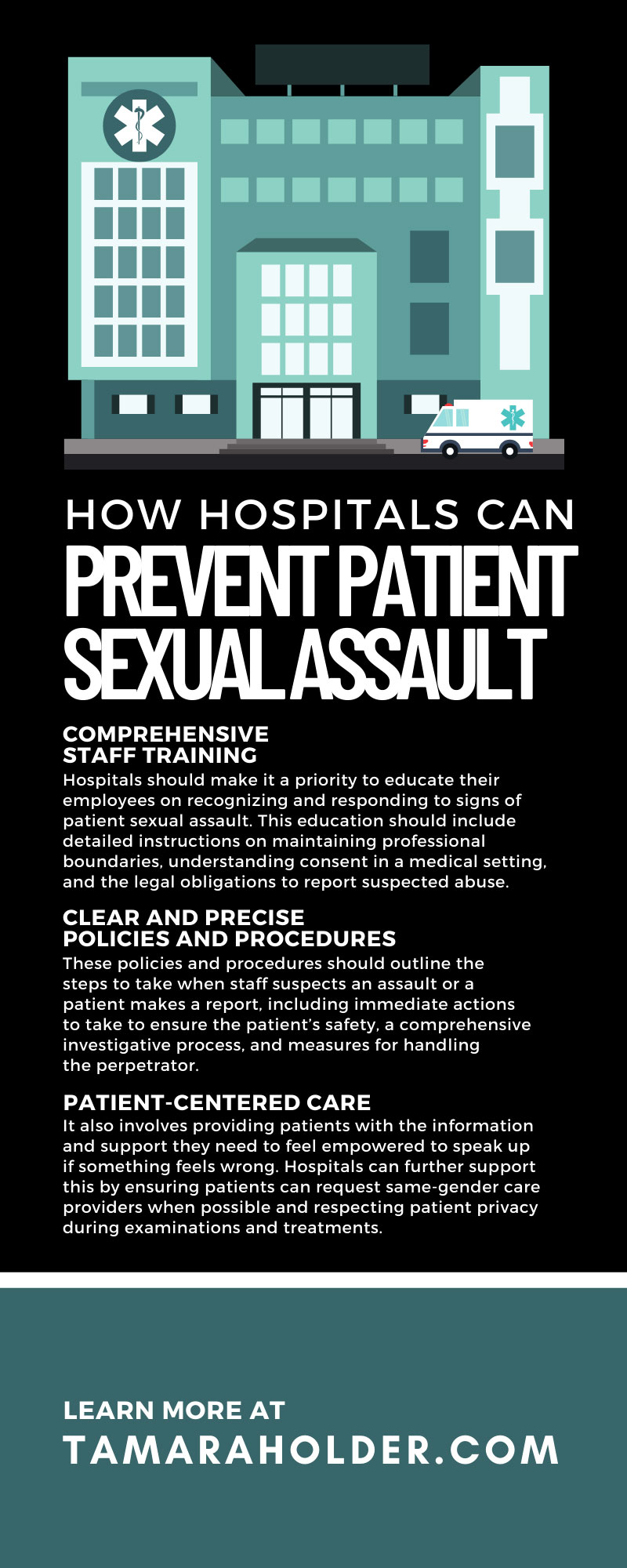
Hospitals should make it a priority to educate their employees on recognizing and responding to signs of patient sexual assault. This education should include detailed instructions on maintaining professional boundaries, understanding consent in a medical setting, and the legal obligations to report suspected abuse.
Training should also cover sensitivity toward victims, emphasizing the importance of a supportive response that respects the patient’s dignity and autonomy. Additionally, periodic refresher courses can ensure that this critical knowledge remains front and center in the staff’s day-to-day operations, fostering a culture of vigilance and respect across the board.
Hospitals must develop clear and precise policies and procedures that are easily accessible to staff and patients to effectively prevent patient sexual assault. These policies and procedures should outline the steps to take when staff suspects an assault or a patient makes a report, including immediate actions to take to ensure the patient’s safety, a comprehensive investigative process, and measures for handling the perpetrator.
Policies must also define unacceptable behavior clearly, ensuring no ambiguity that could lead to overlooking or minimizing misconduct. Establishing these guidelines not only helps staff handle incidents but also serves as a deterrent against potential offenders.
Adopting a patient-centered approach is key to preventing sexual assault in healthcare settings. How so? A patient-centered approach creates a healthcare environment where patients feel heard, respected, and involved in their care.
It also involves providing patients with the information and support they need to feel empowered to speak up if something feels wrong. Hospitals can further support this by ensuring patients can request same-gender care providers when possible and respecting patient privacy during examinations and treatments.
Trauma-informed approaches involve understanding, recognizing, and responding to the effects of all types of trauma. Staff trained in trauma-informed care can interact with patients in a way that avoids re-traumatization and supports their healing process.
These interactions include using language that conveys empathy and respect, ensuring that the doctors thoroughly explain the medical procedures they suggest, and giving patients control over their care to an extent that is safe and effective. Additionally, creating a healing environment that respects patient privacy and promotes a sense of safety can make a substantial difference in fostering trust between patients and healthcare providers.
Environmental safety measures are a crucial tool in creating a secure hospital environment. Enhancing lighting in hallways, parking lots, and secluded areas can deter criminal activities by increasing visibility; surveillance systems in strategic areas can monitor sensitive areas without compromising patient privacy.
Control access to patient rooms and wards using badge access systems, ensuring only authorized personnel can enter. Additionally, hospitals should conduct regular security audits to identify and rectify potential safety vulnerabilities.
Just as educating staff about recognizing and preventing sexual assault is important, it’s also vital to educate patients. By informing patients about their rights and the standard procedures during medical examinations, hospitals can empower individuals to recognize inappropriate behavior. Patients must understand they have the right to ask for a chaperone at any time and should feel comfortable doing so.
Hospitals can also provide educational materials upon admission that detail these rights and procedures, and clear instructions on how to report discomfort or suspected abuse. This proactive approach educates patients about their rights and reinforces the institution’s commitment to maintaining a safe and respectful environment.
While anyone can be a victim of sexual assault, certain groups of people tend to be more at risk of this kind of abuse. This group includes children, older adults, and those with cognitive or physical disabilities who may be less able to advocate for themselves.
Hospitals should implement specialized training that focuses on the unique needs and risks associated with caring for vulnerable populations to safeguard these patients. Additionally, strict visitor control policies and the use of patient advocates or guardians can provide an extra layer of protection.
Effective prevention of patient sexual assault in hospitals also requires cultural competency training for all healthcare staff. This type of training equips healthcare workers with the skills to interact effectively with patients from diverse backgrounds, respecting their cultural beliefs and practices. It emphasizes the importance of communication, understanding personal boundaries, and recognizing cultural variations in the perception of care and personal space.
By fostering an environment of respect and understanding, hospitals can better ensure that all patients feel safe and respected, regardless of their cultural background. Fostering a respectful and compassionate environment reduces the risk of misunderstandings that could lead to discomfort or assault. Additionally, cultural competency helps build trust between patients and healthcare providers, a critical factor in a patient’s willingness to report uncomfortable situations or abuse.
Implementing anonymous reporting mechanisms is essential in creating a safe channel for both patients and staff to report incidents of sexual assault without fear of retaliation or judgment. Hospitals should make these mechanisms easily accessible, ensuring confidentiality and prompt action.
Having a straightforward process encourages more individuals to come forward with their experiences, which is crucial for early detection and prevention. Hospitals should clearly communicate the existence of these reporting channels through signage, pamphlets, and orientation sessions. Healthcare facilities can foster a culture of openness and trust, where they support victims and promptly address violations, by emphasizing anonymity and protection.
Hospitals can prevent patient sexual assault by implementing these strategies and upholding their foundational commitment to patient safety and dignity.
Contact the Law Firm of Tamara N Holder today if you’ve been a witness to patient sexual assault, are a direct victim, or want help creating a safer environment for your patients. We have attorneys who specialize in handling doctor-patient sexual assault cases and dedicate ourselves to providing the legal advice you need to make medical facilities a safer place for everyone.
In today’s rapidly evolving workforce, diversity and inclusivity are more critical than ever. Yet, despite how far we’ve come, nonbinary employees often find themselves navigating unique challenges within the workplace.
This group of people who identify outside the traditional gender binary face issues ranging from misgendering to lack of representation in company policies. If you want to create a more inclusive environment that respects and values every individual’s identity, understanding the unique struggles nonbinary employees face in the workplace is key.
One of the most pervasive challenges that nonbinary employees face in the workplace is the incorrect use of pronouns. Unfortunately, many people still assume a person’s pronouns based on their outward appearance.
Being frequently addressed by pronouns that don’t reflect their gender identity is disheartening and profoundly invalidates their identity. Companies can promote pronoun-sharing practices, such as including the option to share pronouns in email signatures and during introductions in meetings. This normalizes the discussion about and respect for everyone’s gender identity.
On the other hand, in an effort to be more inclusive, employers may sometimes create an environment where nonbinary employees may feel pressured to disclose their pronouns before they’re ready. Nonbinary employees should have the choice to share their pronouns in private rather than asking everyone in a group what their pronouns are.
For example, if everyone else in a group is willing to share their pronouns but another employee isn’t, they may feel singled out. Additionally, forcing every employee to wear a badge that states their pronouns may have a similar effect.
Nonbinary employees also face the serious issue of discrimination and harassment, which can manifest in various ways, from exclusion to outright hostility. This can create a hostile and unwelcoming work environment, leading to increased stress, decreased productivity, and even mental health challenges for these employees.
Unfortunately, many companies lack specific policies that protect nonbinary individuals from these negative behaviors, leaving them without a chance for legal recourse. To address this, organizations must establish clear anti-discrimination policies, offer diversity and sensitivity training for all staff, and provide a safe mechanism for reporting complaints of harassment or discrimination.
Overt discrimination and harassment aren’t the only interactions that can make gender-nonconforming employees feel unsafe. Microaggressions are the everyday, subtle, often unintentional interactions or behaviors that communicate some sort of bias toward marginalized groups, including nonbinary individuals.
These can range from backhanded compliments to seemingly innocuous jokes that, in reality, perpetuate stereotypes or invalidate someone’s identity. For nonbinary employees, microaggressions could involve questions or comments about their appearance or assumptions about their gender based on stereotypes.
The workplace challenges and struggles faced by nonbinary employees are multifaceted and unique, requiring careful attention and consideration.
If you’re dealing with gender-based discrimination in your workplace, let us help. At The Law Firm of Tamara N Holder, our team of gender discrimination lawyers can help you assert your rights under the law and get the justice you deserve.
In a world that’s progressively striving for equality, it can be hard to imagine a workspace where an employee is unjustly treated simply because of their sexual orientation. However, it is because of this progress that discrimination may take on more subtle, insidious forms.
As a result, it’s imperative that aggressors are held accountable for their actions to show that, no matter how under the radar their bias may be, intolerance will not stand. Let’s take an in-depth look at how to file a sexual orientation discrimination lawsuit to give you the courage and knowledge you need to uphold your rights.
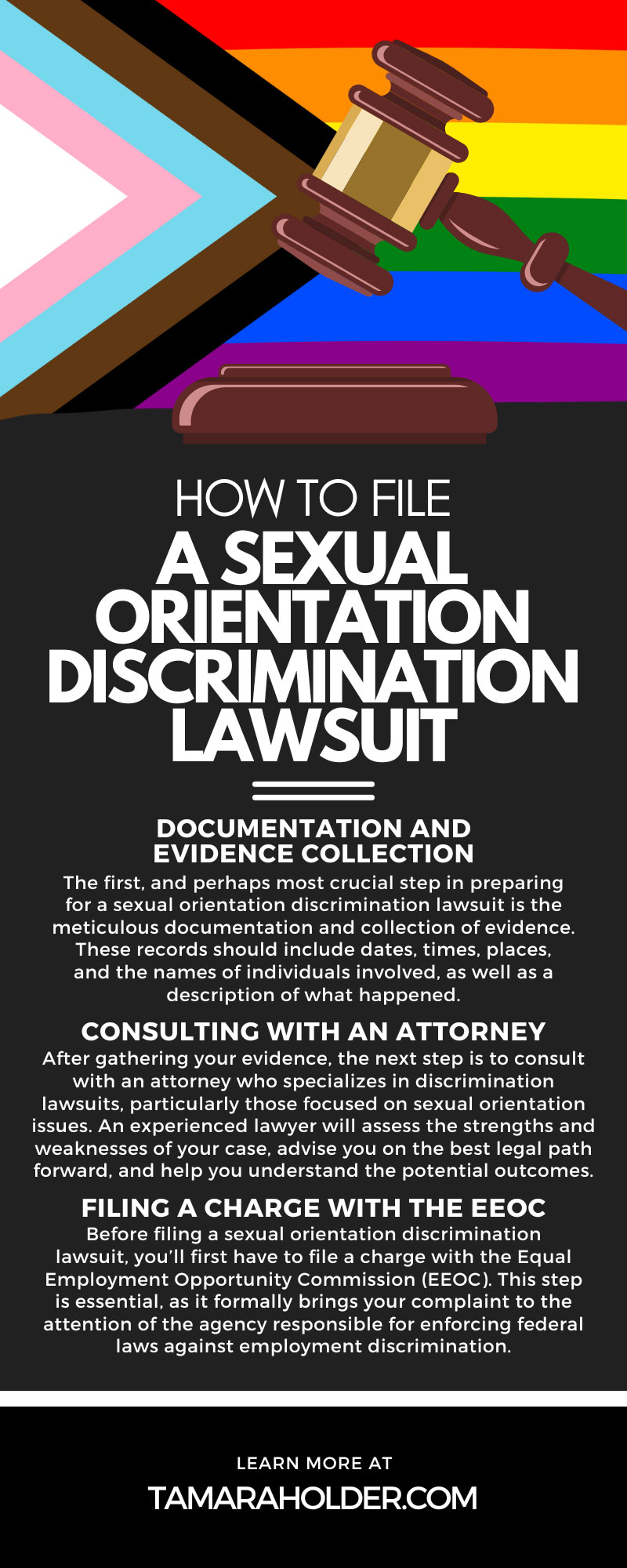
The first, and perhaps most crucial step in preparing for a sexual orientation discrimination lawsuit is the meticulous documentation and collection of evidence. These records should include dates, times, places, and the names of individuals involved, as well as a description of what happened.
It’s also helpful to gather any tangible evidence such as emails, text messages, or witness statements that can support your case. Remember, the more detailed and organized your documentation is, the stronger your case will be.
After gathering your evidence, the next step is to consult with an attorney who specializes in discrimination lawsuits, particularly those focused on sexual orientation issues. An experienced lawyer will assess the strengths and weaknesses of your case, advise you on the best legal path forward, and help you understand the potential outcomes.
They’ll also guide you through any complex legal procedures, from filing the lawsuit to navigating court hearings. This person will be your advocate throughout this process, so it’s important to choose an attorney who has a proven track record and one whom you feel comfortable working with.
Before filing a sexual orientation discrimination lawsuit, you’ll first have to file a charge with the Equal Employment Opportunity Commission (EEOC). This step is essential, as it formally brings your complaint to the attention of the agency responsible for enforcing federal laws against employment discrimination.
To file a charge, you can visit an EEOC office in person or submit your complaint online through the EEOC’s website. The process involves providing detailed information about the incidents of discrimination, including any evidence collected. Filing this charge doesn’t start a lawsuit but is a necessary action that you must take before you can file a lawsuit in most cases.
Receiving the “Right to Sue” letter from the EEOC is a significant step toward proceeding with your sexual orientation discrimination lawsuit. This document is essentially your green light to file a lawsuit in a federal or state court within a specific time frame, usually 90 days from when you receive the letter. It’s crucial to pay close attention to this deadline, as missing it can forfeit your right to sue.
Upon receiving this letter, immediately inform your attorney, who will then prepare to file the lawsuit on your behalf. This step marks the transition from administrative complaint procedures to engaging in the formal judicial process, moving you closer to seeking the justice and resolution you deserve.
Upon receiving the “Right to Sue” letter and consulting with your attorney, the next step involves drafting the complaint to file with the court. This document is critical, as it officially initiates your lawsuit. It outlines your allegations and must detail the facts of your case, pinpoint the laws that have been violated, and state what you’re seeking in terms of relief or damages.
Drafting this document requires precision and legal expertise, as it sets the foundation of your lawsuit. Your attorney will ensure that the complaint is thoroughly prepared, adhering to the required legal standards and accurately presenting your case. This step isn’t just about putting your allegations on paper; it’s about concisely conveying your experience to the court in a manner that underscores the legal responsibility of the defendant.
After the complaint is filed, both parties enter a phase known as the discovery process. This is a critical stage where each side investigates the other’s claims and defenses. You and your attorney will have the opportunity to request documents, ask written questions (interrogatories), and take depositions (sworn, out-of-court oral testimonies) from the opposing party and witnesses.
This process allows you to gather further evidence to support your case while also uncovering what defenses the opposing party might present. It’s a time-consuming phase, but it’s essential for building a strong case.
Before heading to trial, you may have an opportunity for mediation or settlement negotiations. This phase is a critical moment where both parties meet to discuss a possible resolution without going to court.
A neutral third party, known as a mediator, facilitates these negotiations to help find common ground. It’s essential to approach mediation with an open mind while staying firm on your fundamental rights and the justice you seek. Settlements can offer a quicker resolution and potentially less emotional stress than a court trial. However, it’s crucial to consult with your attorney to weigh the benefits and drawbacks of settling compared to proceeding to trial.
Preparing for trial is an extensive process that requires meticulous attention to detail. At this stage, your attorney will engage in drafting opening statements, preparing persuasive arguments, and anticipating the opposition’s tactics. You will also rehearse your testimony to ensure clarity and confidence when speaking in court.
Your legal team will also finalize the list of witnesses who will testify on your behalf, ensuring they are ready and informed about what to expect. This phase is about building a compelling case that substantiates your claims of discrimination, aiming to convince the judge or jury of the merit of your lawsuit.
The litigation process culminates in the trial, where both parties present their cases before a judge or jury. During the trial, your attorney will present the evidence collected, call witnesses to testify, and argue your case for sexual orientation discrimination. The defendant will also have the opportunity to present their side, including any defenses they claim to justify their actions.
The trial is your chance to tell your story and highlight the impact of the discrimination on your life. It can be a rigorous and emotionally charged process, but it is the final step in seeking justice and holding the alleged aggressor accountable for their actions. However, if either party is dissatisfied with the trial outcome, they may pursue an appeal.
Navigating the process of filing a sexual orientation discrimination lawsuit requires patience, persistence, and a carefully planned strategy—but don’t let its complexity deter you from seeking justice. At The Law Firm of Tamara N Holder, our sexual discrimination lawyers aren’t just committed to seeking justice and upholding your rights. They’re dedicated to guiding you through every step of the process to ensure you stay informed and give you the confidence you need during these times.