When you enter a doctor’s office of any kind, it’s because you’re in search of help, knowledge, and unbiased guidance. However, this isn’t the reality for many groups of people—particularly those of heavier weights and larger sizes. What they’re met with is judgment rather than aid.
“Fat” is not inherently a bad word, and having body fat or being fat does not make anyone inherently unhealthy. The unfortunate reality of the situation is that many doctors will judge a person and the state of their health at a glance, which can have a devastating ripple effect. In this article, we’ll explore how deeply weight bias in healthcare harms patients and how it can tarnish the trust they place in their healthcare providers.
The impact of weight bias extends far beyond the immediate interactions between doctor and patient; it can manifest in a deep-seated fear of seeking medical care at all. Many people who have encountered judgment and disdain from healthcare providers start avoiding necessary medical visits altogether, sacrificing their health to escape the emotional anguish.
Imagine the profound isolation and desperation that comes from feeling unwelcome in a space meant to heal. The fear of being humiliated or dismissed can make even routine check-ups a source of intense anxiety for countless people, creating a vicious cycle where medical conditions worsen due to neglect.

The repercussions of weight bias in healthcare can be devastating, more so than the issue of delayed diagnoses. When doctors continually subject patients to judgment and dismissal, their genuine health concerns often go unaddressed, leading to severe and potentially life-threatening conditions being overlooked or misdiagnosed.
This delay is a painful betrayal for patients who muster the courage to seek help despite the stigma they face. Plus, the emotional load of knowing that critical health issues are ignored because of their size can instill a sense of hopelessness and despair in patients.
The consequences of weight bias don’t stop at delayed diagnoses; they cascade into a continual erosion of the quality of care that patients receive. When healthcare providers view and treat patients through a lens of judgment, neglect and prejudice replace the thoroughness and attentiveness that every patient deserves. For people already wrestling with the complexities of their health, this translates into fragmented care, hastily made prescriptions, and half-hearted consultations that overlook their nuanced needs.
The profound sense of being unseen and unheard fosters a debilitating mistrust of the medical system, stripping away the assurance that should come from those entrusted with our well-being. It’s a stark reminder of the imperative to advocate for kindness, respect, and genuine concern in every healthcare interaction.
For many patients, the consistent experience of judgment and dehumanization leads to a deeply ingrained sense of worthlessness and shame. The mental health toll is staggering, as feelings of anxiety, depression, and helplessness compound with each dismissive encounter. Imagine walking into a doctor’s office, already vulnerable and seeking assistance, only to be met with dismissive glances and insensitive comments.
This consistent, traumatic exposure erodes the very essence of self-worth and leaves emotional scars that are difficult to heal. The burden of this persistent bias and discrimination can strip away the hope and resilience that every patient needs to navigate their unique health journey.
The fallout from weight bias goes beyond immediate medical implications; it deeply fractures the trust between patients and healthcare providers. When people feel judged instead of supported, each visit becomes a reminder of their perceived inadequacies rather than a step toward healing.
This growing mistrust can lead patients to question the very competence and empathy of those tasked with their care while causing a gaping rift that may take years to close. The enduring psychological pain of feeling unseen, unheard, and unworthy wreaks havoc on one’s emotional well-being, painting a harrowing picture of isolation and despair.

The path to a more compassionate and inclusive healthcare system begins with awareness and education. Medical professionals need to undergo training to recognize and challenge their own biases while fostering an environment where they treat every patient with dignity and respect. Comprehensive sensitivity training and curriculum updates that emphasize empathy, understanding, and the psychological impacts of bias can positively alter the landscape of patient care. This should include the uprooting of outdated metrics, such as the BMI scale, and how nutritional needs vastly differ from person to person.
Institutions also play a crucial role in this transformation. Implementing policies that promote equitable treatment, encouraging open dialogue on weight bias, and holding healthcare providers accountable for discriminatory behavior are essential steps. Creating a safe and supportive environment where patients feel heard and valued can enhance the quality of care. Additionally, leveraging patient feedback to drive improvements and policy changes allows the voices of those affected by weight bias to shape a more just healthcare system.
Support groups and advocacy networks are vital for providing a platform for individuals to share their experiences and receive support from others who understand their struggles. These communities can empower patients while offering solidarity and a sense of belonging. Knowing they’re not alone in their experiences can be profoundly healing and motivating for patients.
Ultimately, the small, everyday acts of kindness, listening, and understanding will dismantle the entrenched biases within healthcare. Every interaction becomes an opportunity to affirm a patient’s worth and humanity, turning what might have been a moment of discrimination into one of healing. By embracing a holistic and inclusive approach, we can cultivate a healthcare system where every individual is treated with the compassion, respect, and unbiased care they deserve.
Every patient deserves the dignity of being seen and heard without shadows clouding their care. After reflecting upon how weight bias in healthcare harms patients, it’s painfully clear that these prejudices have consequences that extend beyond the doctor’s office.
If you or a loved one have experienced mistreatment from a healthcare professional in any way, let the Law Firm of Tamara N Holder help. Our experienced attorneys have experience in dealing with patient sexual assault and general mistreatment and are here to support you in your pursuit of justice. Let’s work together to create a world where weight does not determine the quality of care one receives.
While the primary goal of Title IX is to foster an inclusive and equitable educational environment, the law also includes provisions for religious exemptions. These exemptions allow educational institutions controlled by religious organizations to bypass certain Title IX requirements if they conflict with the institution's religious tenets. To help you understand the scope and application of these exemptions, this article will take a close look at the religious exemptions under Title IX.
Title IX is part of a set of Education Amendments originally signed into law by Richard Nixon in 1972. With the first words written by Birch Bayh, the overall intention was to eliminate sex-based discrimination in any education program or activity receiving federal financial assistance. Its transformative impact on educational environments opened doors for countless individuals, particularly women and girls, to pursue academic and athletic opportunities previously denied to them.
However, American laws are supposed to operate on a foundation that “separates church and state”, no matter how often the law may or may not actually abide by this. These religious exemptions acknowledge the complex interplay between the law's goal of promoting equality and respecting the diversity of religious beliefs. By permitting institutions to claim exemptions based on their religious tenets, Title IX seeks to balance these sometimes competing interests, fostering a nuanced approach to achieving its overarching vision of inclusivity.
Title IX's core principles are grounded in the commitment to creating an equitable educational landscape where no one is disadvantaged based on sex. It mandates that schools receiving federal funds must eliminate discriminatory practices and barriers, paving the way for a fairer academic experience.
Title IX's protections include protecting students against sexual harassment to ensuring equal opportunities in sports and academics. Not only does it safeguard students from various forms of sex-based discrimination, but it also obliges institutions to implement proactive measures that foster a safe and inclusive environment for all.

Religious exemptions allow faith-based institutions to operate in alignment with their religious convictions, even if those practices might otherwise conflict with the non-discrimination requirements of Title IX. These exemptions recognize the importance of upholding religious freedom and the right of such institutions to maintain their doctrinal beliefs. For example, if a Presbyterian school refuses to ordain a woman, this wouldn’t necessarily be a violation of Title IX as some Christian sects only ordain men into preaching roles.
To claim an exemption, an institution must be controlled by a religious organization and demonstrate that complying with certain aspects of Title IX would violate its religious tenets. This adds a layer of complexity to the law, as it strives to respect the religious identities of these institutions while still safeguarding the rights of individuals within these educational environments.
To qualify for a religious exemption under Title IX, an educational institution must meet specific criteria that demonstrate its affiliation with a religious organization. The institution must first be able to substantiate its religious control, which often involves documentation or a clear connection to a recognized religious group.
Moreover, the institution must provide evidence that compliance with certain Title IX requirements would conflict with its religious tenets. This might include theological statements, religious doctrine, or other formal declarations that outline the institution's beliefs and practices. This meticulous approach ensures that only genuinely faith-based institutions can claim such exemptions, maintaining the delicate balance between upholding civil rights protections and respecting religious freedoms.
The pathway for educational institutions to obtain a religious exemption from Title IX requires careful documentation and adherence to specific guidelines. First, institutions must thoroughly assess their compliance needs and religious doctrines to determine the specific areas of Title IX requirements that conflict with their beliefs.
Additionally, they should provide contextual explanations and historical background to demonstrate the integral nature of these religious tenets to their institutional mission. Gathering testimonies or letters from religious leaders further strengthens their case, showcasing a unified stance within their religious community. This thorough compilation not only legitimizes their exemption claim but also underscores their commitment to maintaining their faith-based identity while still operating within the broader educational landscape.
Next, they need to gather comprehensive evidence that supports their religious affiliation and the tenets in question. Following this, a school representative must submit a formal written request to the U.S. Department of Education. It should illustrate the necessity for the exemption and detail the particular Title IX provisions they aim to be exempted from. Once received, the Department evaluates the submission, considering the religious institution's claim against the broader context of Title IX's goals before approval.

While religious exemptions under Title IX aim to protect the freedom of faith-based institutions, their impact on students and faculty is multifaceted, often sparking significant debate. On one hand, these exemptions allow faith-based schools to maintain their religious values and practices, which can be essential for communities seeking an environment that aligns with their spiritual beliefs.
However, for students and faculty, especially those who may not share the same religious outlook or who belong to marginalized groups, these exemptions can lead to experiences of discrimination and exclusion. For instance, LGBTQ+ people often find themselves at the crossroads of legal protections and religious doctrines. This can create a challenging environment where staff and students feel unwelcome and unsupported, potentially leading to self-doubt about their identity and morality.
Opponents of religious exemptions argue that these allowances can, in practice, create loopholes that undermine the very protections Title IX is designed to ensure. They contend that such exemptions may be exploited by some institutions to rationalize discriminatory policies, particularly against women and LGBTQ+ people.
Critics also emphasize that while religious freedoms are vital, they should not come at the expense of the rights of students and faculty to access a non-discriminatory and inclusive learning space. They advocate for tighter regulations and oversight to ensure that religious exemptions are not misused to sidestep fundamental civil rights.
Looking at the religious exemptions under Title IX reveals a complex interplay of promoting inclusivity while respecting religious diversity. As we continue to seek harmony between religious convictions and the pursuit of an equitable educational environment, the conversation around religious exemptions under Title IX will undoubtedly evolve. As a result, it will continually challenge us to reflect on and affirm our commitment to “fairness for all”.
However, just because your educational institution is exempt from certain aspects of Title IX, this doesn’t mean they can act with impunity. At the Law Firm of Tamara N Holder, our Title IX attorneys are well-versed in navigating the nuances of religious exemptions and can help you ensure that your institution is still compliant with all applicable laws and regulations.
In the intricate landscape of Title IX cases, the decision-maker holds a pivotal role in shaping the trajectory of the investigation and its ultimate resolution. Navigating the complexities of such cases requires a nuanced understanding of legal standards, institutional policies, and a commitment to fairness and impartiality.
Their responsibilities extend beyond mere adjudication; they must ensure that the rights of all parties are protected while fostering an environment of trust and transparency. This introduction delves into the significance of the decision-maker's role, exploring how their actions impact the outcomes of a Title IX case.
The Title IX decision-maker is an individual entrusted with the critical task of impartially evaluating the evidence and testimonies presented in a Title IX case. Their role is multifaceted, requiring a blend of legal acumen, ethical sensitivity, and an unwavering commitment to due process. Decision-makers must meticulously review all the facts, ensuring that every piece of evidence is weighed with objectivity and fairness.
They play an active role in questioning, clarifying, and synthesizing information to construct a comprehensive understanding of the case. This responsibility also involves empathizing with the individuals involved and recognizing the emotional and psychological weight carried by those who come forward.
Through their decisions, they can provide a sense of closure, justice, and sometimes healing, making their role not only judicial but profoundly humane. In essence, the integrity and diligence of the decision-maker underpin the entire Title IX process, ensuring it remains a beacon of fairness and justice within educational institutions.

One of the core responsibilities of the decision-maker is to conduct a thorough and thoughtful review of the evidence. This process demands more than a superficial glance; it requires an in-depth analysis of all materials, including witness statements, documentary evidence, and any other relevant information.
The decision-maker must scrutinize each piece of evidence with a discerning eye, mindful of the context within which it was presented. They need to look beyond the facts and consider the emotional and psychological dimensions that may be at play. This comprehensive approach helps ensure that the decision is not only factually accurate but also fair and considerate of the emotional and mental well-being of those involved.
Evaluating credibility is another critical function of the decision-maker in a Title IX case. This responsibility goes beyond simply determining who is more believable; it requires a compassionate and nuanced approach to understanding each individual's perspective. The decision-maker must attentively listen to and observe the testimonies of all parties, noting inconsistencies and contradictions, while also considering the stress and trauma that might affect their accounts.
Recognizing the inherent complexities in human communication, they must weigh the reliability of each piece of information. This may include considering factors such as the witness's demeanor, their ability to recall events accurately, and potential biases or motives. Furthermore, the decision-maker must approach this task with an underlying sensitivity, acknowledging the emotional toll that reliving traumatic events can take on those involved.
During a hearing, the decision-maker must facilitate a structured yet compassionate environment where all parties can present their narratives fully. This process requires exceptional communication skills, as the decision-maker must guide the proceedings with clarity while being sensitive to the emotional states of the participants.
They ask probing questions that elicit important details, carefully balancing the need for thoroughness with an awareness of any distress that the questioning might cause. Furthermore, maintaining a respectful and calm demeanor throughout the hearing helps to create a space where individuals feel heard and valued, even amid tension and conflicting accounts.
Ensuring due process is fundamental to the legitimacy and fairness of any Title IX investigation, and this responsibility lies heavily on the shoulders of the decision-maker. At its core, due process guarantees that all parties involved have a fair opportunity to present their case, encompassing the right to be heard, to question evidence, and to respond to allegations.
They must also uphold clear guidelines and expectations for the parties, ensuring equitable access to evidence, and providing equal opportunity for both sides to articulate their perspectives and arguments. Meticulous record-keeping and clear communication are essential in this regard, as they help demystify the process and build trust in its integrity.
Maintaining confidentiality is an essential aspect of the decision-maker's role, ensuring that sensitive information is protected throughout the entire Title IX process. This responsibility demands a high level of discretion and an unwavering commitment to privacy, as the details of these cases often involve deeply personal and potentially distressing experiences.
Decision-makers must be vigilant in securing all records and communications, safeguarding them from unauthorized access. They must also communicate the importance of confidentiality to all parties involved, underscoring that it’s not only a legal requirement but also a crucial element in preserving trust and dignity.
A well-articulated written determination conveys the outcome of the case and provides a thorough explanation of the rationale behind the decision, detailing the evidence considered and how credibility was assessed. It should outline the findings and conclusions in precise terms, addressing each relevant point raised during the investigation and hearing.
Decision-makers should craft these determinations with utmost care, ensuring that they are clear, comprehensive, and empathetic. Additionally, the language used must be respectful and considerate, recognizing the emotional weight these documents carry for all parties involved.

Effective decision-maker training is pivotal in preparing individuals to handle the complexities and sensitivities involved in Title IX cases. This training encompasses a broad range of skills, knowledge, and experience to confirm that decision-makers are well-equipped to manage their responsibilities with diligence and empathy. The curriculum typically includes detailed instruction on legal standards, institutional policies, and the principles of due process, ensuring decision-makers are grounded in the framework governing Title IX cases.
Additionally, the training emphasizes the development of critical skills such as active listening, unbiased analysis, and sensitive communication, which are essential for evaluating evidence and testimonies impartially. Role-playing scenarios and case studies often form a core component of the training, allowing decision-makers to practice navigating difficult conversations and emotional situations in a controlled environment. This experiential learning helps to build their confidence and competence, ensuring they can respond adeptly to real-world cases.
The role of the decision-maker in a Title IX case is both challenging and profoundly impactful. Ultimately, their work ensures that educational environments remain spaces where every member can feel secure, respected, and valued.
If you’re looking for representation to help you through this process or feel like the outcome of your case isn’t satisfactory, let us help. At the Law Firm of Tamara N. Holder, our Title IX lawyers specialize in dealing with sensitive scenarios such as fraternity rape, sexual harassment cases, and discrimination cases. Our attorneys have the expertise, experience, and compassion to support you through a Title IX case.
Navigating pregnancy while maintaining a career can be both an exhilarating and challenging experience. As an expectant mother, you may have concerns about how your pregnancy will affect your job, your rights concerning maternity leave, or how to address any potential workplace discrimination.
Knowing your rights and understanding the protections afforded to you can empower you to manage both your professional responsibilities and the unique demands of pregnancy. This article will provide you with comprehensive information on your workplace rights if you're in the midst of pregnancy while employed.
The Pregnancy Discrimination Act (PDA) of 1978 is a critical piece of legislation that protects pregnant employees from discrimination. Under the PDA, it is illegal for employers with 15 or more employees to discriminate against an individual based on pregnancy, childbirth, or any related medical conditions.
This means employers must treat pregnancy just like any other temporary disability. The PDA ensures that employers cannot use pregnancy as a basis to deny a woman a job, promotion, or any other work-related benefit.

The Family and Medical Leave Act (FMLA) is another crucial piece of legislation that supports pregnant employees. Under the FMLA, eligible employees are entitled to take up to 12 weeks of unpaid leave for specific family and medical reasons, including the birth of a child and care for a newborn.
Importantly, this leave is job-protected, meaning your position or an equivalent one must be available to you upon your return. To be eligible, you need to have worked for your employer for at least 12 months and clocked in at least 1,250 hours during the 12 months prior to taking leave.
The Americans with Disabilities Act (ADA) plays a pivotal role in providing rights to pregnant employees when pregnancy-related conditions qualify as disabilities. The ADA requires employers with 15 or more employees to provide reasonable accommodations for employees dealing with disabilities, including complications arising from pregnancy. These accommodations might include modified work schedules, temporary reassignment, or even additional breaks to cater to medical needs.
When planning for maternity leave, be aware that specific rules and entitlements may vary significantly depending on the state you work in. Some states have more generous maternity leave policies that provide paid leave or extend the duration of leave beyond what federal laws mandate. For instance, states like California, New Jersey, and Rhode Island offer paid family leave programs, giving new parents financial support while they take time to bond with their newborns.
Your first step should be to familiarize yourself with your state’s specific laws and any additional benefits your employer might offer. Some companies provide paid maternity leave policies as part of their benefits package, even though it’s not federally mandated. Proactively reaching out to your HR department to gain a clear understanding of what’s available to you can help you plan more effectively and reduce any uncertainties you might have.
Additionally, having an open conversation with your employer about your anticipated leave can pave the way for a smoother transition and ensure your professional responsibilities are covered during your absence.
Reasonable accommodations are adjustments or modifications provided by an employer to enable pregnant employees to perform their job duties effectively while managing their health needs. These accommodations are typically necessary when standard working conditions pose challenges to the employee's well-being due to pregnancy-related conditions.
Reasonable accommodations can be diverse and tailored to individual needs, ranging from more frequent restroom breaks to modified work schedules. In some cases, temporary reassignment to less strenuous tasks or lighter workloads may be required. Employers are mandated to engage in an interactive process to understand the specific accommodations required and implement them.

Common accommodations requested by pregnant employees often reflect the diverse and dynamic needs of pregnancy. These may include more flexible working hours to accommodate medical appointments, access to a private space for rest, or the option to work remotely for those experiencing morning sickness or fatigue.
Ergonomic adjustments, such as a more supportive chair or a sit-stand desk, can significantly enhance comfort and productivity. Additionally, some employees might need temporary changes in their job duties to avoid heavy lifting or exposure to potentially harmful substances.
Understanding the signs of pregnancy discrimination is critical for safeguarding your rights in the workplace. Pregnancy discrimination can manifest in various subtle and overt ways, making it essential to stay vigilant. One of the primary indicators is a sudden change in how you are treated after disclosing your pregnancy.
This could include unjustified negative performance evaluations, exclusion from important meetings or projects, or being overlooked for promotions or career advancement opportunities. Additionally, any remarks or behaviors from supervisors or colleagues that suggest your pregnancy is a burden or an inconvenience could also be signs of discrimination.
Another red flag is if your employer starts imposing impossible workloads or unrealistic deadlines, which can be construed as an attempt to force you out of your position. Being demoted, laid off, or forced to take leave despite being able to continue working under reasonable accommodations are further indicators of discrimination.
Facing pregnancy discrimination at work can be daunting but remembering that you're not powerless is crucial. The first step is to document everything meticulously. Keep a record of discriminatory comments, actions, and any changes in your treatment at work. This documentation will be invaluable if you need to present your case.
Next, don’t hesitate to reach out to your HR department to file a formal complaint. Companies are required to investigate such complaints and take appropriate actions to rectify the situation.
If internal resolutions aren't effective, you have the right to file a complaint with the Equal Employment Opportunity Commission (EEOC). The EEOC is a federal agency dedicated to protecting employees from workplace discrimination and can guide you through the process of making a claim. Engaging with a knowledgeable employment lawyer can also be a strategic move, as they can offer personalized advice and represent you if legal action becomes necessary.
Navigating the complexities of your workplace rights during pregnancy may seem daunting, but a firm understanding of your rights and the resources available can make all the difference. If you believe your rights and entitlements have been violated or you’ve been discriminated against, we’ve got your back.
Tamara N Holder is a feminist attorney who fights for women's rights in the workplace. Trust us to represent your interest while considering the complexities and nuances of being a mom.
Navigating the complexities of Title IX cases can be overwhelming for all parties involved. Title IX Informal Resolution is a voluntary process that can resolve complaints of sexual harassment less formally. Unlike the formal grievance process, which often involves a thorough investigation and adjudication, informal resolution aims to reach a mutually acceptable agreement. This laxer process is beneficial for those who don’t want to undergo intense legal processes.
What is involved in this resolution process? Who facilitates it? Should you choose this strategy? In order to answer all of these questions and more, this article will help you understand Title IX informal resolution and the role of the resolution facilitator.
Title IX informal resolution is a collaborative process where both parties voluntarily agree to resolve the complaint with the help of a trained facilitator. This facilitator, often a university official or a neutral third party, plays a crucial role in guiding the discussions and ensuring a fair and balanced process. The facilitator’s primary responsibility is to help the parties communicate openly and reach a resolution that respects the values and needs of everyone.
During the informal resolution process, both parties actively participate in negotiations and offer input on the terms of the agreement. This process can include apologies, policy changes, or educational programs designed to prevent future incidents.

While both the informal resolution and formal grievance processes aim to address and resolve complaints, they differ significantly in their approach and structure. The formal grievance process is typically more rigid and adversarial, involving a comprehensive investigation, hearings, and potential disciplinary actions based on findings. It requires a fact-finding investigation conducted by a designated investigator, followed by a live hearing where both parties present their case, question witnesses, and receive a determination from a decision-maker. This process can be lengthy and stressful, often exacerbating tensions between the parties.
In contrast, the informal resolution process promotes a collaborative environment where parties work together toward a mutually acceptable solution. Rather than focusing on evidence and witness testimonies, informal resolution centers on dialogue, understanding, and reconciliation. Plus, the outcomes can be more flexible and creative.
For instance, resolutions might involve behavioral agreements or restorative practices that repair harm and rebuild trust. As a result, informal resolution can feel less intimidating and more empowering, leading to more satisfactory and willingly agreed-upon resolutions.
Opting for informal resolution offers numerous advantages, making it attractive for many people navigating Title IX complaints. One of the primary benefits is the expedited nature of the process. Informal resolution typically resolves matters more quickly than formal processes, allowing both parties to move forward without the prolonged stress and uncertainty of an extended investigation.
Additionally, this approach facilitates open communication and mutual agreement, fostering a sense of empowerment and participation. The parties are more likely to feel respected, which can be crucial for emotional well-being and the healing process. Plus, resolutions can include apologies, educational reforms, or community service, which can be more holistic and restorative than punitive measures.
Informal resolution isn’t without its drawbacks. Because it relies heavily on voluntary participation, the process may be ineffective if one party is uncooperative or unwilling to engage in good-faith negotiations. There’s also a risk of unequal power dynamics influencing the outcome, potentially leaving one party feeling pressured to accept a resolution that doesn’t fully address their needs or concerns.
Furthermore, the informal resolution process lacks the rigorous fact-finding and adjudication of the formal grievance process. There may be less opportunity to hold parties accountable for their actions in a manner that a formal investigation might provide.
Informal resolution is best for situations where the parties involved have a pre-existing relationship that they wish to preserve or mend. For instance, incidents involving misunderstandings or “minor” conflicts between colleagues or classmates may benefit from a non-confrontational approach that prioritizes communication and mutual agreement. Informal resolution is also useful when both parties are motivated to resolve the matter quickly and collaboratively, without the potential adversarial nature of a formal investigation.
However, this method might be inappropriate in cases with significant power imbalances, as one party may feel pressured to agree to less-than-ideal terms. Additionally, situations involving severe misconduct or patterns of repeated behavior may require the formal grievance process to ensure a thorough investigation and appropriate accountability.

Now that we understand the Title IX informal resolution process, let’s dive deeper into what it takes to be a resolution facilitator. This person must possess a unique blend of skills and personal attributes to guide the resolution process. Typically, facilitators are university officials, such as Title IX coordinators or individuals specially trained in mediation and conflict resolution. They must undergo comprehensive training to understand the nuances of Title IX regulations, conflict management strategies, and the ethical considerations involved in handling sensitive cases.
A good facilitator has strong interpersonal skills, including active listening, empathy, and the ability to maintain neutrality and impartiality. On a personal level, facilitators need to be skilled communicators, capable of guiding conversations and helping all parties articulate their needs and concerns clearly. The trust and confidence of the participants are paramount, so facilitators must demonstrate integrity, confidentiality, and a deep commitment to fairness and justice.
At the heart of the Title IX informal resolution process lies the facilitator’s critical responsibilities and duties. Facilitators begin by creating an atmosphere where both parties feel safe and supported to share their perspectives openly. They conduct initial consultations to understand each party’s viewpoints and desired outcomes, setting the stage for productive and balanced discussions.
During joint sessions, facilitators steer conversations with care, asking insightful questions and actively listening to ensure both individuals feel heard and valued. They document agreed-upon resolutions meticulously, drafting clear and comprehensive agreements that outline the actions and responsibilities of all parties involved. Then, they schedule follow-up meetings to monitor the implementation of these agreements, providing ongoing support and addressing any issues that may arise.
As mentioned, facilitators need to go through rigorous training; what exactly does this include? The courses typically include a thorough understanding of Title IX regulations, ensuring facilitators are well-versed in the legal framework governing these cases.
Additionally, facilitators receive instruction in conflict resolution techniques, learning strategies for mediation, negotiation, and fostering constructive dialogue. These programs emphasize the importance of creating an environment where all parties feel safe, respected, and heard.
Role-playing scenarios and case studies often form a significant part of the training, allowing facilitators to practice and refine their skills in realistic settings. Continuous education is also crucial, as facilitators need to stay updated on evolving best practices and changes in Title IX policies. By combining rigorous training with the right personal attributes, facilitators can guide parties through the informal resolution process with competence and compassion.
Deciding whether the informal resolution process is right for you can be intimidating, especially when you want to minimize emotional stress while getting full justice. The good news is you’re not alone. The Law Firm of Tamara N Holder is a Title IX law firm that will guide you and help you fully understand your options.
While the First Amendment protects freedom of expression, speech, religion, press, assembly, and petition, these rights are not absolute in the workplace. Various factors, such as whether you work for a public or private employer, can significantly influence the scope of your protections. Learn when your First Amendment rights apply at work to obtain a fuller understanding of your rights.

We must first understand what the First Amendment protects before diving into the ins and outs of how it applies at work. Simply put, the First Amendment primarily safeguards individuals from government interference in their freedom of speech, religion, press, assembly, and petition. Therefore, the government can’t create laws that unduly restrict these forms of expression.
It’s crucial to remember that these protections mainly apply to public-sector employees rather than those in the private sector. Public workplace employees have certain protections from retaliation by their employer for exercising their First Amendment rights.
However, this protection only applies if their speech addresses a matter of public concern and does not interfere with workplace efficiency or harmony. Conversely, private-sector employees have relatively limited First Amendment protections as the law does not consider private employers to be government actors.
Understandably, there might be some confusion regarding public versus private employers and who falls under which category. Public employers include any governmental entity or organization. Examples include federal, state, and local government offices, public schools and universities, law enforcement agencies, and municipal departments such as Parks and Recreation. For instance, teachers working at a public high school or clerks employed by the city government are public-sector employees and thus have broader First Amendment protections.
On the other hand, private employers encompass businesses and organizations that governmental entities do not operate. These types of businesses include corporations, non-profit organizations, small businesses, and private educational institutions. Employees at companies such as Google, Walmart, or privately owned local restaurants fall under the category of private-sector workers. Because private employers aren’t government actors, they have more leeway to set and enforce their own policies regarding speech and expression in the workplace.
Because public employees have more robust protections, the First Amendment protects their freedom of speech in many scenarios. For instance, a teacher in a public school may speak out during a community meeting about budget cuts affecting educational resources. Their speech will receive protection if it pertains to a matter of public concern, such as the quality of education, and doesn’t disrupt the school’s operations or negatively impact relationships among colleagues.
Similarly, a government employee may write an op-ed in a local newspaper criticizing public spending priorities. The law safeguards their right to express such viewpoints as long as the content doesn’t interfere with their work performance or workplace harmony .
This protection stems from the principle that public employees retain certain constitutional rights because public employers are extensions of the government, which must respect those rights. However, your speech must strike a delicate balance; overly disruptive or irrelevant statements might not receive protection. For example, the context and potential disruption to the workplace may lead to justified disciplinary actions if a public sector employee uses their work email to send politically charged messages.
The interplay between First Amendment rights and company policies becomes crucially significant in the realm of private employment. Private employers possess considerable authority to regulate speech within the workplace to preserve an efficient and productive environment. Consequently, employees must understand that the First Amendment doesn’t shield their expressions, particularly those made on the job.
For instance, a company can discipline or terminate an individual without infringing on their constitutional rights if the individual criticizes their employer or discloses proprietary information on social media. However, private employees are not entirely devoid of protection. Other legal provisions, such as the National Labor Relations Act (NLRA), may protect certain types of speech, such as discussing work conditions or wages.
Now that we have a better idea of what protection means in the public and private sectors, when do your First Amendment rights apply at work? Under the NLRA, employees in the public and private sectors can talk about their salaries, working conditions, and union-related activities without fear of retaliation. This type of speech is known as “concerted activity,” which the NLRA aims to protect, recognizing the importance of collective employee action in addressing workplace issues.
Moreover, whistleblowing is another form of protected speech. The First Amendment protects employees who report illegal activities, safety violations, or other forms of misconduct to the appropriate authorities from employer retaliation. These laws encourage employees to speak out against injustice while safeguarding their position within the workplace.

As we’ve learned, the First Amendment doesn’t protect you from any and all consequences if you decide to say whatever you please. For example, the First Amendment and other legal provisions will not protect an employee engaging in speech that includes threats, harassment, or discriminatory remarks toward colleagues.
Many believe that the First Amendment allows them to say anything, and while the proper authorities may not arrest you for saying whatever you feel, this doesn’t mean there aren’t consequences. Employers maintain the right to enforce policies that promote a safe and respectful work environment, and speech that undermines these principles can result in disciplinary action or termination.
Spreading false information about the company, its employees, or its clients can also lead to serious repercussions, including defamation lawsuits. Additionally, the inappropriate use of company resources, such as utilizing work emails or communication platforms for non-work-related or politically charged messages, can disrupt workplace harmony and productivity.
Even though your employer should know how to balance workplace policies with your First Amendment rights, this isn’t always the case. All too often, employers penalize employees for speaking out, even when fully protected. Many of these cases involve women speaking out against employers for harassment, abuse, or discrimination and receiving unjust punishment.
Our feminist lawyers at the Law Firm of Tamara N. Holder dedicate themselves to upholding women’s rights and the rights of all employees equally. We recognize that navigating the complexities of speech rights and workplace policies can be daunting, but our commitment to helping you understand your protections and advocating for your rights is strong. Remember, knowing your rights is essential for protecting them effectively.
Deciding to take legal action against your employer is a significant decision fraught with emotions and serious considerations. It’s a path that requires careful deliberation and strategy, particularly in the context of whether you should resign from your position.
Quitting your job amidst such circumstances might seem like the immediate solution to your distress, but it can inadvertently affect the dynamics of your legal claim. In this article, we’ll unpack the reasons why you shouldn’t quit if you plan on suing your employer.
Remaining employed grants you closer proximity to ongoing evidence that could strengthen your case. When you stay on the job, you maintain direct access to documents, emails, and interactions that may prove critical in demonstrating your claims. You may not have access to this information if you leave the company, making it far more challenging to obtain the evidence needed to support your case.
Additionally, being present in the workplace allows you to witness and document any ongoing issues, such as discriminatory practices or breaches of contract. This immediate access can significantly strengthen your position by providing a continuous stream of proof that might not be available to you if you resign.
Understandably, you may not want to stay at your place of employment if you’re afraid of harassment or retaliation, regardless of how much evidence you can obtain. However, employees who choose to sue their employers while still employed can benefit from various legal protections designed to shield them from retaliation. Federal and state employment laws protect employees from being fired, demoted, harassed, or otherwise discriminated against for filing a lawsuit or engaging in whistleblower activities.
This means you can take legal action or report your employer’s unlawful activities without fear of immediate retribution. By remaining employed, you’re safeguarding your current income and benefits while ensuring any action an employer takes against you can bolster your claim.

The main and most important reason why you shouldn’t quit your job if you plan on suing your employer is the financial stability it provides. Continuing to work for your employer while pursuing legal action ensures you keep receiving your paycheck. This can be crucial during long and costly legal processes. Suing an employer often involves attorney fees and court costs, and in the end, you may not receive a settlement.
By maintaining your employment, you avoid the added stress of financial instability and can cover your living expenses and any immediate legal costs without dipping into savings or taking on debt. You’ll also continue to accrue benefits such as health insurance, retirement contributions, and paid time off.
Keeping your job status has another major advantage; it strengthens your marketability and employability. If your case doesn’t result in the outcome you hoped for or you choose to seek employment elsewhere, consistent employment keeps your professional profile attractive to potential employers. If you quit too hastily, especially before you find another job, you may spend a lengthy period of time unemployed.
Employers often view these long gaps in employment with suspicion, which could hinder your future job search. Staying employed also allows you to continue gaining experience and honing skills, and you may even secure new accomplishments that enhance your resume. Maintaining or advancing your career trajectory ensures you remain competitive in the job market, regardless of the lawsuit’s outcome.
Having the security of your current job while you prepare or proceed with a lawsuit against your employer can also provide significant negotiation leverage. This advantage stems from your employer’s awareness that you’re in a stable position to sustain a prolonged legal battle if necessary.
From their perspective, the knowledge that you’re not under immediate financial pressure can make them more inclined to seek a settlement out of court. It signals to your employer that you’re fighting the case on your terms and not out of desperation.
On the other hand, if you choose to leave, an employer—especially a larger corporation with time and money—may wait you out. Remember, they likely have access to more legal resources than you do and will use that to their advantage to throw hurdles your way and prolong the legal process. They know that this means you’ll spend more money, and you’ll eventually run out of it.

Staying in your job can enhance your legal standing in several key ways. First, it demonstrates to the court and other involved parties that your intention is to address and rectify serious concerns within your workplace. This can make your claims appear more credible and grounded to the court, signifying a genuine desire for justice.
Furthermore, continuing to work minimizes the risk of your employer arguing for reduced damages because you left your position voluntarily. This claim can potentially weaken your compensation claims. In essence, being an active employee gives you a stronger foundation for you to launch your legal claim. It underscores your commitment to resolving matters lawfully while upholding your professional duties.
Staying employed while you take legal action brings an often-overlooked benefit: the stability and routine of your daily work life. For many people, this security and consistency is vital, especially for employees who have a network of support and friendship within the company. This can be a powerful source of mental and emotional support during the stress of legal proceedings.
It offers a structured routine and keeps you engaged with your professional community. When facing the daunting uncertainties of legal battles, this engagement can be crucial for your overall well-being. The regularity of work life aids in preserving your professional identity and acts as a vital coping mechanism, helping you manage stress.
Although the decision to sue an employer is complex and filled with emotional nuance, there are many advantages to staying employed. Ultimately, whether you choose to resign depends on your personal resources, but it also hinges on your sense of safety.
Maybe you’ve gone through discrimination or verbal harassment. These scenarios can make it feel unsafe to remain in the workplace, especially if you don’t have the right support.
The good news is that no matter what you decide to do, the Law Firm of Tamara N Holder is here to help. Our harassment and discrimination legal attorneys will help you receive the justice and compensation you deserve.
Title IX, a federal civil rights law in the United States, aims to prevent sex-based discrimination in any education program or activity receiving Federal financial assistance. Sex-based discrimination includes verbal or physical harassment and sexual assault.
In the instances where a staff or faculty member sexually abuses a pupil, the aggressor is responsible for their own actions; who’s responsible for handling the legal case? Without the legal know-how, the answer can be difficult to discern. We’ll clarify who is liable for employee-student sexual abuse.
Title IX combats sexual violence within educational institutions by mandating a safe environment for all students, free from sex-based discrimination, including sexual abuse and harassment. This federal law requires schools, colleges, and universities that receive federal funding to take immediate and effective actions to investigate and resolve incidents of sexual violence.
Educational institutions must implement clear policies, provide awareness programs, and put procedures in place for handling complaints of sexual violence. Title IX also protects the rights of victims, offering support services like counseling and the option to change academic, living, or working situations if necessary.
Employee-student sexual abuse involves any form of non-consensual sexual conduct between an educational institution’s staff member and a student. This can range from unwanted physical contact, such as touching or non-consensual penetration, to non-physical interactions, including sexual advances through digital communication or coercion.
Any sexual behavior or advances initiated by an employee toward a student are deemed inappropriate and abusive, given the inherent power imbalance in such relationships. It’s up to schools and universities to maintain clear policies that are easily accessible to the students, outlining these scenarios so there’s no confusion.
Determining who is liable for employee-student sexual abuse can be complex. Primarily, the individual perpetrator of the abuse holds direct responsibility for their actions. However, the educational institution may also be liable, especially if it failed to take reasonable measures to prevent the incident or did not respond adequately.
In situations where the institution knew about the abuse and did not act or was willfully ignorant, its liability increases. Ultimately, both the abuser and the educational institution can be accountable in cases of employee-student sexual abuse.
No matter who’s responsible, sexual abuse is life-altering for the victim. Hiring the right legal team is critical to receive justice. At the Law Firm of Tamara N Holder, our Title IX attorneys are experienced and dedicated to cases like yours; we will treat your situation with the respect and discrepancy it deserves.
Title IX has emerged as a crucial piece of legislation in the wake of the landmark Supreme Court decision to overturn Roe v. Wade. It assists in upholding the rights and protections of pregnant women in educational settings.
Understandably, parsing through how Title IX protects pregnant women post-Roe v. Wade can be complex without the right legal background. Every citizen deserves to understand the full extent of their rights, which is why this article will easily guide you through these legal complexities.
The Roe v. Wade decision, made by the U.S. Supreme Court in 1973, was a pivotal moment for women’s rights in North America. It recognized a woman’s legal right to choose an abortion, setting a precedent that protected women’s privacy and reproductive rights under the U.S. Constitution nationwide.
This landmark ruling significantly impacted not just the legal landscape but also the cultural and social attitudes toward women’s reproductive health and freedom. Many women faced dangerous and, at times, life-threatening conditions to seek abortions due to the lack of legal and safe options before Roe v. Wade. The decision led to improved healthcare and autonomy for women, allowing them to make choices about their bodies and futures without undue government interference.
We must also understand that at the time, simply speaking about women’s menstrual cycles was still considered “gross” or “taboo.” Women’s bodies were meant to be seen and enjoyed, not cared for and understood. Roe v. Wade opened the door for a slew of discussions that paved the way for women’s rights not just in the medical field, but on a sociocultural level.
The Supreme Court overturned Roe v. Wade in 2022, a decision that profoundly changed the legal landscape regarding abortion in the United States. This reversal allowed individual states to set their own abortion laws, leading to a patchwork of regulations that vary significantly across the country. Strict abortion bans have been enacted in some states, while others have taken steps to protect and expand access to abortion.
However, the implications stretch far beyond denying a person’s right to an abortion. Many times, women seek pregnancy termination procedures for reasons such as rape, incest, life-threatening pregnancies, or even due to the lack of finances. The overturning of Roe v. Wade not only put women’s lives in danger, but the resulting child may not have access to safe, quality care if a woman is forced to carry the pregnancy to term.
Additionally, as legislation changes in some states, so does the definition of when pregnancy starts. These changes open the door for states to enact other dangerous forms of legislation. For example, states such as Georgia and Arizona make it legal for pharmacists to refuse to dispense contraceptives for religious reasons. There’s also the increased risk of criminal charges for those who accidentally miscarry.
Title IX, passed as part of the Education Amendments of 1972, began as a law aimed at preventing sex-based discrimination in any education program or activity receiving federal financial assistance. Initially intended to address inequalities in academics and athletics, Title IX’s reach has since expanded to include sexual harassment and assault, ensuring a safe and equitable educational environment for all students.
It led to an increase in female participation in collegiate sports, significantly narrowed the gender gap in higher education, and laid the groundwork for policies regarding gender equality in schools. Title IX ensures that students or staff can participate in any educational or employment opportunity regardless of their sex, sexual orientation, or gender identity.
Now that we’ve laid the groundwork and have a better understanding of what these rights mean, we can sufficiently answer the question: How does Title IX protect pregnant women post-Roe v. Wade? The answer, much like these laws and legislations, is complex. While it cannot aid in terms of access to abortion and contraceptives, it can continue to ensure that women, regardless of their pregnancy status and mental health, receive protection.
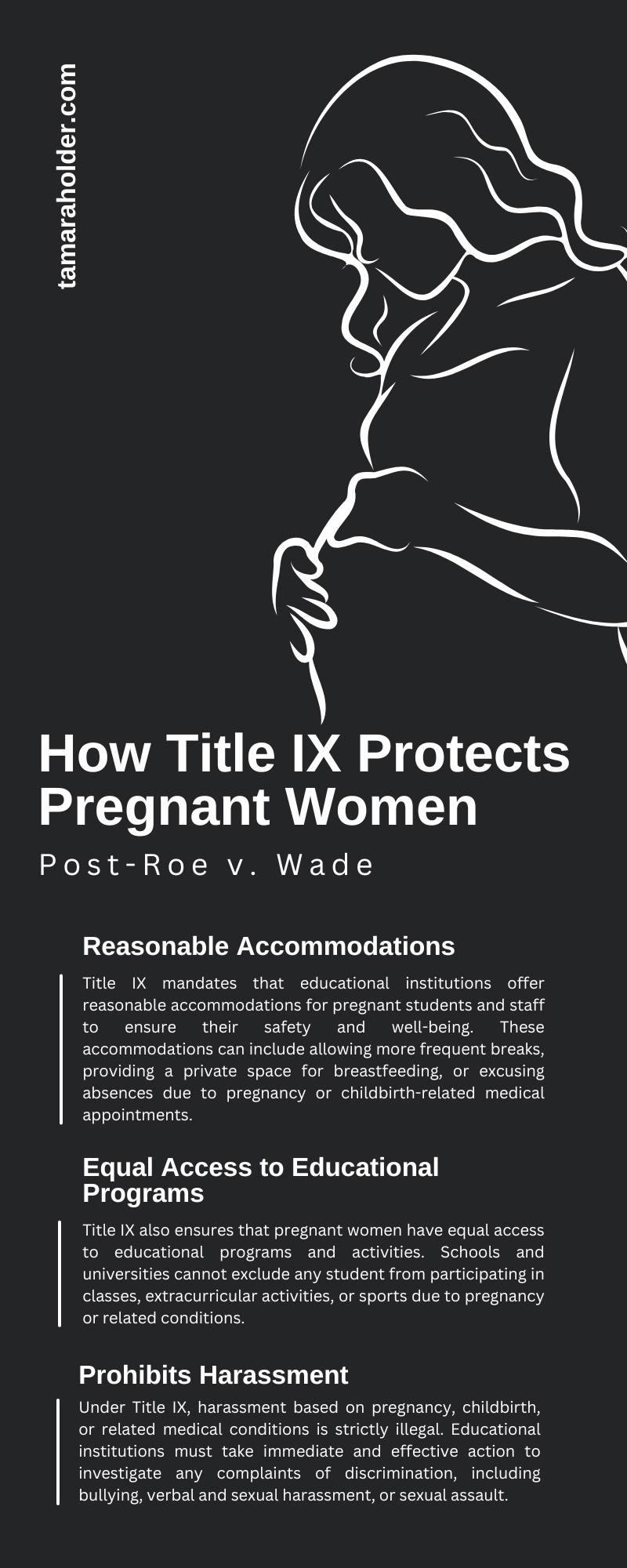
Title IX mandates that educational institutions offer reasonable accommodations for pregnant students and staff to ensure their safety and well-being. These accommodations can include allowing more frequent breaks, providing a private space for breastfeeding, or excusing absences due to pregnancy or childbirth-related medical appointments. The goal is to prevent circumstances where pregnant women must choose between their health and their education or job.
Title IX helps maintain an inclusive environment that supports the educational and occupational aspirations of pregnant individuals by requiring schools and universities to adapt their policies and practices. This requirement ensures that pregnancy does not become a barrier to one’s educational and professional progress.
Title IX also ensures that pregnant women have equal access to educational programs and activities. Schools and universities cannot exclude any student from participating in classes, extracurricular activities, or sports due to pregnancy or related conditions. The university must treat pregnant women as they would any other person with a temporary medical condition if a pregnant woman should choose to continue participating in a sport or activity.
For instance, the school should allow a pregnant student to return to the same academic and extracurricular status as before her leave if she requires a temporary leave. Additionally, a coach or teacher cannot force someone to stop participating simply because it is against their religious or personal beliefs. This provision ensures that pregnant students receive fair treatment and that the school does not penalize or set them back in their academic goals.
Under Title IX, harassment based on pregnancy, childbirth, or related medical conditions is strictly illegal. Educational institutions must take immediate and effective action to investigate any complaints of discrimination, including bullying, verbal and sexual harassment, or sexual assault.
They must also take the steps necessary to prevent its reoccurrence and protect the victim. These steps and protections can include accommodations such as allowing the student to switch dorms or giving an employee a separate office away from their alleged aggressor.
Title IX stands tall and continues to protect pregnant women from unjust treatment as damaging legislations continue to pass and some people become more comfortable in their bigotry. However, Title IX isn’t the only shield pregnant women have.
The Law Firm of Tamara N Holder dedicates itself to protecting the rights of women across the country. Our Title IX lawyers have extensive experience in handling discrimination cases and will work tirelessly to ensure that your rights remain protected.