Curious what happens to a doctor’s license after they’re found responsible for sexually abusing a patient? A medical license gives a doctor legal permission to practice, and the state medical board oversees that license. When allegations of patient abuse arise, the board may investigate whether the doctor should keep the right to practice. The outcome depends on the state and what the investigation establishes. Revocation is possible, but it isn’t automatic in every case.

When a sexual abuse complaint is filed against a physician, the state medical board opens an investigation. That board has the authority to suspend or permanently revoke a doctor's license, depending on what the investigation finds.
A suspension is temporary. The doctor can't practice during that period, but once it ends, they can apply to have their license reinstated. Revocation is permanent removal from practice. The doctor loses the legal right to see patients, write prescriptions, or hold any position that requires a medical license in that state.
Some states go further. If a doctor's license is revoked in one state, a multi-state licensing alert can be triggered through the Interstate Medical Licensure Compact, which means other states are notified and can act on their own licenses too. A doctor who loses their license in Illinois, for example, can't simply relocate to Indiana and start over without scrutiny.
Beyond revocation, a board can also issue formal reprimands that stay on the doctor's public record, require supervised practice before reinstatement, mandate psychiatric or behavioral evaluation, and impose restrictions on which patient populations the doctor is allowed to treat. These conditions don't disappear quietly. They're searchable through state licensing databases, which means anyone can look up a physician's disciplinary history.
Medical board action can affect far more than whether a doctor keeps a license. It can change where they’re allowed to practice, what other institutions learn about their conduct, and whether future patients remain exposed to them. For survivors, those consequences can provide another form of accountability outside the criminal court system.
A license action isn't the same as a criminal conviction. Medical boards operate independently from law enforcement, so a doctor can lose their license even if they were never criminally charged. The standard of proof is lower than in criminal court, which is one reason why survivors sometimes see faster action through the licensing system than through the criminal justice process.
When a board takes action, that action becomes part of the doctor's permanent public record. It shows up on the National Practitioner Data Bank, a federal database that hospitals, insurers, and licensing boards check before hiring or credentialing a physician. A doctor flagged in that system will find it nearly impossible to practice in any institutional setting, even if a state grants reinstatement.
That public record also gives other patients information they didn't have before the complaint was filed. If someone treated by that doctor years ago never knew about prior complaints, they do now.
Hospital privileges are often revoked the moment a medical board suspends a license. A doctor who loses hospital privileges loses access to surgical suites, inpatient care, and the professional infrastructure that makes a practice sustainable. Even without a full revocation, those losses can end a career.
Malpractice insurers also monitor board actions. A doctor who loses coverage because of a disciplinary finding will have an extremely difficult time resuming practice in any capacity.
A doctor who's lost their license can't legally practice medicine. Licensing exists because patients trust that the person treating them has been vetted and is currently authorized to provide care. When that authorization is gone, so is their legal access to patients.
That protection extends to future patients who have no idea the abuse ever happened. A revocation doesn't just respond to what occurred. It removes the opportunity for it to happen again.

Revocation doesn't happen automatically. There's a formal process, and understanding it can help you know what to expect if you're considering a complaint.
The process starts with a complaint filed directly with the state medical board. You don't need an attorney to file, but you do need to provide as much detail as possible about what happened, including dates, the nature of the contact, and any documentation you have. The board assigns an investigator once the complaint is received.
The board's investigation can include interviews with the complainant, the doctor, and any witnesses. It can also include a review of the doctor's patient records, prior complaints on file, and any criminal history. This process takes time. Some investigations close in months. Others take longer depending on the complexity of the case and the board's caseload.
If the investigation produces enough evidence, the case moves to a formal hearing. The doctor has the right to appear and respond to the findings. The board then deliberates and issues a decision. That decision can range from a letter of reprimand to full revocation, depending on what the evidence supports.
Contemporaneous records carry weight. That includes written notes made shortly after the incident, messages exchanged with the doctor, witness accounts from anyone who knew about what happened, and any documentation from other healthcare providers you saw afterward. A prior complaint against the same doctor, even an unresolved one, can also factor into the board's decision.
You don't need a perfect paper trail to file. Boards investigate based on what's available. But the more specific the account and the more supporting documentation exists, the stronger the foundation for board action.
What happens to a doctor's license after abuse? After a substantiated case, a doctor’s license may be suspended or revoked depending on state law and the board’s findings. Revocation prevents the doctor from continuing to practice under that license.
If you have a doctor sexual assault on patient case you want to bring to light, reach out to Tamara N. Holder and her team today. As an attorney in this area of law, Holder can explain the legal paths available to you and pursue accountability aimed at keeping an abusive doctor from harming another patient again.
Patient abuse can traumatize a person in ways that extend far beyond the exam room. And it can be difficult for survivors to speak on what happened against someone they trusted with their body and their health. Trauma-informed counsel is meant to help survivors build a case against their abuser so they can pursue justice without being retraumatized in the process. But what is it exactly, and what makes it so essential for patient abuse claims? Here's what you need to know.

Trauma-informed counsel is a legal approach rooted in an understanding of how trauma affects a person's memory, behavior, and ability to communicate.
Attorneys who practice this way know that trauma doesn't follow a straight line. A survivor might remember certain details vividly and blank on others entirely. They might struggle to tell their story in chronological order, or feel physical distress when recounting specific events. Those responses don't automatically mean the survivor's account is unreliable. It's how the brain processes experiences that were too overwhelming to fully absorb in the moment.
A trauma-informed attorney won't push you to give a perfectly linear account when that isn't how your memory works. They won't interpret silence, hesitation, or emotional reaction as weakness or inconsistency. Instead, they take those trauma responses into account when gathering facts, preparing you for testimony, and evaluating gaps in your memory.
Not every legal case carries the same emotional weight, and patient abuse is in a category of its own. Here's why the trauma-informed framework isn't optional in these cases.
Patients go to doctors in a state of vulnerability. You're often undressed, sometimes sedated, almost always dependent on the provider's expertise. That dependency is part of what makes abuse in a medical setting so damaging, and it's also part of what makes it hard to name.
Many survivors spend years wondering if what happened was really abuse, because the person who harmed them was someone in a position of medical authority. A trauma-informed attorney understands that dynamic. They won't ask you to explain why you didn't leave or why you went back for follow-up appointments. They already know how that power structure works.
It's common for patient abuse survivors to wait months or years before coming forward. Shame, fear of not being believed, and confusion about whether what happened was "bad enough" to report are all factors that delay disclosure.
In a legal context, delay can be used against a survivor if the attorney doesn't know how to address it properly. A trauma-informed attorney anticipates this. They understand why the delay happened, and they know how to present that timeline in a way that doesn't undermine your credibility.
Talking about gynecological abuse specifically requires a level of precision and sensitivity that standard legal representation often doesn't account for. The details are intimate. The terminology is clinical. And the experience of having to describe what happened to a stranger in a professional setting can itself feel violating.
Trauma-informed counsel reduces that barrier. Your attorney will be prepared for the emotional difficulty of these conversations, and they'll create space for you to communicate at a pace that doesn't make the legal process feel like another site of harm.
In any patient abuse case, the defense will scrutinize your account carefully. They'll look for inconsistencies in how you've described events across different conversations, reports, or time periods. They'll use those inconsistencies to argue that your account isn't reliable.
A trauma-informed attorney knows that inconsistency in trauma narratives is normal and documented. They can counter that strategy directly, and they'll prepare you for the kind of questioning you're likely to face without letting the preparation itself become a traumatic experience.
If you're in active distress during depositions, interviews, or court appearances, that distress can affect how your testimony comes across. It doesn't mean your account is less truthful; it means the legal process hasn't been designed with trauma survivors in mind.
An attorney who understands trauma will work with you before those high-stakes moments so you're as prepared as possible. They'll help you understand what to expect, what you have the right to ask for, and how to communicate your experience in a setting that wasn't built to receive it.

Finding the right attorney for a patient abuse case takes more than a basic search. Here's what to look for and what to ask.
Patient abuse cases require trauma-informed counsel because the legal process alone isn't built to account for the psychological reality of what survivors carry into it. Without it, the very system meant to deliver justice can become another source of harm.
At Tamara N. Holder, we specialize in taking on gynecologist sexual abuse cases. If you have a gynecologist sexual assault claim you want to bring forward, contact our team today, and let's discuss your options and the path ahead. Holder's team takes care to center your experience, protect your dignity throughout the process, and build the strongest possible case on your behalf.

"Do no harm" is a common philosophy you may have heard in the context of medical ethics. But what does it mean legally? Here's what you need to know if you're considering a case against a healthcare provider and are wondering whether "do no harm" plays any role in what happened to you.

The phrase comes from the Latin primum non nocere, which translates to "first, do no harm." It originates from the Hippocratic tradition and asks physicians to weigh the consequences of their actions before treating a patient.
In plain terms, it means a doctor should never cause unnecessary harm under the cover of care.
Ethically, this principle is embedded in how physicians are trained. But it's not a law. No federal statute uses "do no harm" as its operative language. What the law uses instead is the standard of care: the legal benchmark that defines what a competent physician in the same specialty would have done under the same circumstances.
When a doctor falls below that standard, that's where legal liability begins. The standard of care exists because medicine involves real power over real bodies, and courts need a way to evaluate whether that power was abused. In cases of sexual abuse, the violation isn't ambiguous. It's a deliberate breach of the trust and authority a medical license creates, and no legitimate standard of care leaves room for it.
It's also worth knowing that a physician's ethical obligations don't disappear because a patient signed a consent form or didn't physically resist. Consent to treatment isn't consent to abuse. Those are two entirely separate things, and the law treats them that way.
Sexual abuse by a physician is one of the clearest possible violations of this principle. The examples below aren't edge cases. They're documented patterns that courts have recognized as actionable harm.
A doctor has a clinical reason to touch certain areas of the body during specific exams. Outside of that clinical scope, any touching is abuse. If a physician touched you in a way that had no diagnostic purpose, that's not a gray area.
This includes breast, pelvic, or rectal contact performed without medical justification, without explanation, or without a chaperone present when you requested one or when clinic protocol required it.
Before any procedure, a physician is legally required to explain what they're doing and why. You have the right to say no, and that right doesn't expire once you're already in the exam room.
If a doctor performed a gynecological exam, inserted a device, or conducted any physical procedure without walking you through it first, or did so while you were sedated beyond the scope of what you originally agreed to, that's a failure of informed consent. In many states, that failure is independently actionable. You may have a legal claim on that basis alone, separate from any other harm that occurred.
Doctors hold authority in the exam room. That authority can be weaponized. If a physician used your diagnosis, your medication access, or your fear of losing care to pressure you into compliance, that's coercion, and coercion in a medical setting is a recognized form of abuse.
It doesn't have to look like physical force to qualify. A doctor who tells a patient she needs a particular exam or she'll be discharged from care, when no such exam is medically warranted, is using institutional power to override your ability to refuse.
If you reported what happened to clinic staff, a patient advocate, or hospital administration and were told it wasn't a big deal, were discouraged from filing a complaint, or had your account minimized, that response compounds the original harm.
Women and LGBTQ+ patients are disproportionately likely to be disbelieved when they report physician misconduct. That pattern of dismissal doesn't just cause emotional injury. It can delay your access to justice and, in some states, affect how the statute of limitations is calculated if the concealment prevented you from pursuing a claim sooner. If an institution knew what was happening and buried it, that institution may carry legal liability too.

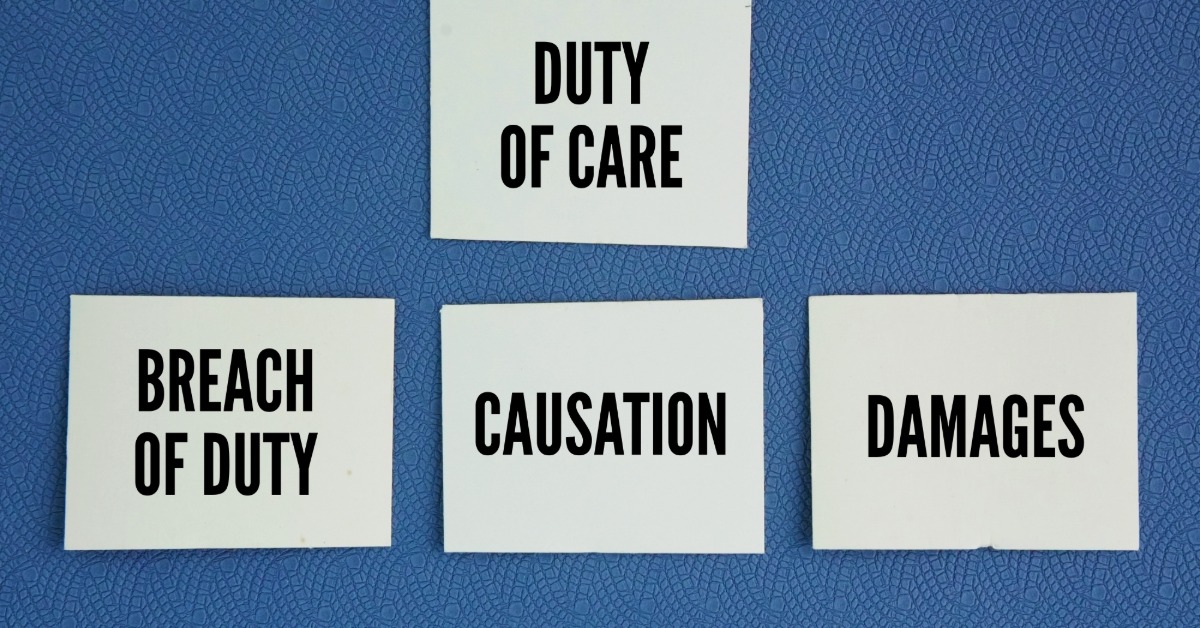
When you bring a case against a physician for sexual abuse, courts don't argue philosophy. What they examine is whether the doctor breached a legal duty and whether that breach caused you harm.
Here's what typically needs to be established:
Sexual abuse cases against physicians can move through the legal system differently than standard malpractice claims. Some are handled as civil cases. Some involve criminal proceedings running parallel. Depending on the facts, you may also have claims against the hospital or practice that employed the physician if they knew about prior complaints and failed to act. Institutions that protect abusive physicians rather than their patients don't get to walk away clean just because the physician was the one in the room.
One thing that stops a lot of people from moving forward is the statute of limitations. The filing window varies by state and by the type of claim. Some states have extended or suspended those deadlines specifically for sexual abuse cases, recognizing that survivors often need time before they're ready to come forward. If you've been waiting because you weren't sure what happened to you was actionable, that's exactly the kind of question an attorney can answer without pressure or judgment.
It's also worth knowing that you don't need a perfect paper trail to start a conversation with a lawyer. Medical records, a written account of what happened, and any documentation of complaints you made are all useful. But an absence of documentation isn't an absence of a case. Attorneys who handle physician abuse cases know how to build one.
"Do no harm" isn't a legal statute, but a guiding ethical principle. Still, it can shape how a sexual abuse case is understood by establishing where a physician's conduct broke from any defensible standard of care.
If you need a women's rights attorney to help guide you through a doctor sexual abuse case, contact Tamara N. Holder and her team today. We can look at your records, your account of what happened, and even prior complaints against the physician if "do no harm" was abandoned the moment you were alone in that exam room.
You may have heard the term "negligent supervision" before, discussed in connection to medical misconduct cases. But what is it? And what does it mean for a case? Here's what you need to know before you decide whether it applies to your situation.
Negligent supervision is a legal concept that holds an employer, institution, or authority figure responsible when someone under their watch causes harm, and that harm could have been prevented with reasonable oversight.
In a medical setting, that authority figure is often a hospital, clinic, or practice. The person causing harm is usually a staff member, physician, or other provider working under that institution's roof.
The key question in a negligent supervision claim isn't only what the individual did. It's what the institution knew, or what they should have known, and whether they acted on it. If a hospital had reason to believe a provider posed a risk to patients and did nothing, that inaction can become part of your legal case.
This matters in abuse cases because it shifts the conversation beyond one individual. It asks who had the power to stop this, and why they didn't.
Negligent supervision doesn't look the same in every case. The way it shows up depends on who held authority, what they knew, and how they responded.
Before a provider ever sees a patient, an institution has an obligation to vet who they're bringing in. That includes reviewing licensure history, checking for prior complaints or disciplinary action, and verifying credentials.
When a hospital or clinic skips those steps, or ignores red flags that a basic background review would have uncovered, they give a harmful provider access to patients. If that provider later commits abuse, the institution’s failure to screen may support a negligent hiring claim.
Some of the most devastating negligent supervision cases involve providers with documented complaint histories. A patient reported something. A colleague raised a concern. Someone filed an internal grievance. And nothing changed.
When an institution receives a complaint about a provider and doesn't investigate, doesn't discipline, and doesn't inform patients, they've made a choice to protect the provider over the people in their care. That decision has legal consequences.
Oversight doesn't end at the hiring stage. Institutions have an ongoing responsibility to monitor how providers interact with patients, especially in situations where vulnerability is built into the dynamic.
What does that look like in practice? It can mean reviewing patient feedback, requiring chaperones during certain examinations, or conducting periodic performance reviews. When none of that is in place, and a provider takes advantage of that absence, the institution's lack of monitoring becomes relevant to any legal claim.
Sometimes the institution does know. A complaint surfaces. An internal investigation begins. And the provider is quietly moved to a different department, or allowed to keep practicing while the situation is reviewed, or simply never removed at all.
Keeping a provider on staff after warning signs surface, without adequate safeguards, is its own form of negligent supervision. The institution had an opportunity to protect future patients and chose not to.

If you experienced abuse at the hands of a medical provider, you may be wondering whether you can only pursue the individual who harmed you, or whether the institution behind them carries any responsibility. Negligent supervision is one of the legal theories that can expand that answer.
Here's how it can affect the shape of your case:
Not every case will involve negligent supervision, and not every form of it will apply to yours. What you're looking for is a connection between what the institution failed to do and what happened to you.
What does negligent supervision mean for patients navigating a medical abuse case? It means the institution behind your provider may carry legal responsibility for what happened to you. This can change the scope of your case considerably; for example, it may make it possible to hold the hospital or clinic, in addition to the individual provider, accountable for their failure to protect you, or to recover damages that reflect the full extent of that institutional failure.
Tamara N. Holder is a Chicago-based doctor sexual assault lawyer who has handled cases involving negligent supervision across a range of medical abuse situations. If you believe it was a factor in your experience and want to understand your legal options, contact Holder's team today. They can review the details of your case, identify whether institutional liability applies, and help you move forward with the support you deserve.
A chaperone is defined as a neutral third party who observes a medical examination. They can be a nurse, a medical assistant, or another trained staff member. Chaperones are commonly offered for sensitive exams like pelvic or breast exams to provide the patient with a witness and a layer of protection if the provider behaves inappropriately. But beyond that, there are many other ways a chaperone can protect patients during an exam. Here's why they matter.

A chaperone is trained to recognize when a provider’s words or actions fall outside the boundaries of standard care. They know what a routine exam looks like, so when something seems off, they notice it. If a doctor performs an unnecessary touch, makes an inappropriate comment, or lingers longer than the procedure requires, the chaperone can catch it in real time.
That gives you protection that doesn’t rely on your own medical knowledge. Most patients don’t know what “within scope” means for every procedure, and you shouldn’t have to figure that out while you’re sitting in an exam room.
When a chaperone witnesses something inappropriate, they don't have to stay quiet. They have the standing to interrupt the exam. That interruption can stop misconduct before it goes further. Without a chaperone in the room, a provider who intends to act inappropriately faces no immediate check. With one present, the risk of going undetected drops significantly, which on its own can deter the behavior from starting.
If a patient files a complaint or pursues legal action, the chaperone's account becomes part of the record. They can describe what they saw, what the provider said, and how the exam was conducted.
This is one of the most concrete ways a chaperone protects patients beyond the appointment itself. A patient's recollection alone, while valid, can be challenged. A trained professional who was in the room and documented what occurred adds a second, credible source to support the patient's account.
Medical misconduct often happens in private. A closed exam room with just a patient and a provider creates exactly the kind of isolation that makes abuse possible and harder to prove.
A chaperone removes that dynamic entirely. The provider knows someone else is watching, and the patient knows they’re not alone. That changes the power balance in the room. It doesn't guarantee safety, but it takes away one of the conditions that predatory providers count on.
Some patients hesitate to say anything during an exam, even when something feels wrong, because they don’t want to seem difficult or they second-guess their own read of the situation.
A chaperone gives the patient another person to check in with in the moment. If you’re uncertain about something that just happened, you can look to the chaperone and see whether they noticed it too. Their reaction, or even the fact that they’re watching closely, can support what you already picked up on. Knowing someone else is in the room to witness the exam can also make it easier to speak up right then instead of staying silent and sorting through it alone later.

After the appointment, a chaperone is typically required to document what occurred during the exam. That documentation may include the procedures performed, the language used, and anything that stood out as unusual. This written record exists independently of the patient's own notes or memory.
In cases where a patient decides weeks or months later to file a complaint, that documentation still exists in the provider's file. It creates a paper trail from the day of the appointment forward, which can be valuable if the case moves into a legal process.
If a patient's case goes before a medical board or into civil litigation, a chaperone can be called to testify about what they witnessed. Their account carries weight because they were physically present, they had a professional responsibility to pay attention, and they have no personal stake in the outcome of the case.
That combination makes their testimony a credible form of evidence. For patients pursuing a claim against a provider, a chaperone who corroborates the account can make the difference in whether the case is taken seriously.
You don't have to wait for a provider to offer a chaperone. You can ask for one before or at the start of any exam. Healthcare facilities are generally required to accommodate that request, and a provider who refuses or discourages you from having one present may be violating office policy or patient safety rules.
Asking for a chaperone isn’t an accusation. It's a standard part of informed, patient-centered care, and no one in a medical setting should make you feel otherwise for requesting it.
Providers who have engaged in misconduct more than once often operate by identifying patients who are unlikely to report, then pushing boundaries carefully over time. A chaperone disrupts that pattern by making every appointment observable.
If a provider has behaved inappropriately in the past and a chaperone is now present during exams, any repeat behavior gets documented. Over time, that documentation can reveal a pattern. Patterns are what medical boards and courts look for when determining whether misconduct was isolated or systemic.
Chaperones can help protect patients during exams by serving as a second set of eyes in the room. If a doctor crosses a line, they can stop the conduct in its tracks, document it, and provide you with valuable testimony should you pursue a case later. If you're headed into an exam you're nervous about, know that you have the right to request a chaperone. They can make the difference between an allegation and a corroborated account.
Tamara N. Holder is a women's rights attorney who specializes in doctor sexual abuse cases. If you've experienced misconduct and want to pursue legal action, contact her today for a confidential consultation. Holder can listen to your account, help you gather evidence, including chaperone documentation if available, and guide you through every step of what comes next.
July 16, 2026
Seattle-based Dearie Law Group has joined Tamara Holder Law in representing more than 100 women in litigation against Providence-Kadlec and OB-GYN Mark Mulholland. Additional patients continue to come forward with allegations of medical and sexual abuse and ignored complaints.
Filed in King County Superior Court, the lawsuits allege Mulholland abused female patients while employed at Associated Physicians for Women (APW) and Providence-Kadlec, located in Richland, one of the Tri-Cities in Washington. The filings include allegations of unauthorized procedures, non-consensual medical treatment, inappropriate sexual conduct, and other forms of abuse. Specific allegations include performing the so-called "husband stitch," an unnecessary postpartum stitch performed for a partner's sexual benefit rather than the patient's medical care; removing fallopian tubes without consent; performing forced C-sections; and rectal penetration without medical need. The alleged conduct represents profound violations of bodily autonomy and medical ethics.
Mulholland worked as a physician for defendants from 1999 until July 2025. In April 2025, the Washington Medical Commission filed charges against Mulholland, alleging Mulholland exhibited a "pattern of conduct and lack of appropriate boundaries toward patients that falls below the standard of care."
Dearie Law Group brings extensive trial experience to the legal team, including a recent $130 million jury verdict in the wrongful death of a child at a daycare. Attorneys Ray Dearie and Drew Lombardi also earned eight placements in the 2024 Top Verdicts rankings, including a record slip-and-fall verdict and the No. 1 truck accident verdict in 2024.
"We are honored to welcome Ray Dearie, Drew Lombardi, and Aaron Dean to our team. Their experience and commitment to justice strengthen our ability to pursue accountability. We are determined to hold the defendants responsible for turning a blind eye to Mulholland's abuses of women," said Tamara Holder.
"Our collaboration with Tamara Holder Law strengthens our collective experience and resources, enabling us to effectively represent survivors and navigate the complexities of multi-plaintiff litigation," said Ray Dearie.
About Tamara Holder Law
Tamara Holder is an internationally recognized attorney specializing in women's rights and institutional abuse litigation. Founded in Chicago in 2005, Tamara Holder Law represents plaintiffs in complex, multi-plaintiff cases, with a focus on doctor-patient sexual abuse and institutional accountability. In 2024, Holder and her team secured the largest doctor-patient sexual abuse settlement in Illinois history. Holder has testified before Congress on issues affecting survivors, served as a legal analyst for Fox News Channel for nearly a decade, and is a dedicated advocate for women in recovery. For more information, visit tamaraholderlaw.com.
About Dearie Law Group
Dearie Law Group is a Seattle-based law firm representing individuals and families in complex personal injury, wrongful death, sexual abuse, and medical malpractice matters. Founded in 2008 by Raymond Dearie, the firm focuses on high-stakes litigation and providing strategic advocacy for clients throughout Washington State. For more information, visit dearielawgroup.com.
OBGYNs have a level of access to their patients' bodies that most other doctors never have. This, unfortunately, can open the door to grooming and abuse. Grooming is defined as a pattern of behavior used to build trust with a patient in order to lower their guard over time. If you notice warning signs during your visits, it's important to address them before the situation escalates. These guidelines will help you set boundaries to protect yourself from providers looking to take advantage of their position.

OBGYNs see patients at their most vulnerable, which is exactly why grooming can go unnoticed for so long. The behaviors below don't always look alarming in the moment. Some are subtle enough that you might second-guess yourself. Don't.
Here are grooming behaviors to watch for:

Setting limits with your OBGYN can feel uncomfortable, especially when the power dynamic is already uneven. But your comfort and safety aren’t things you negotiate away at the door. Here's how to stay protected.
You have the right to have a support person in the exam room. A friend or family member doesn't need a reason to be there. Having a witness in the room makes it harder for a provider to act outside professional boundaries, and harder for them to deny it later if they do.
If bringing someone isn't possible, request a chaperone before the exam begins. This is a standard practice in clinical settings, and any professional office should accommodate it without hesitation.
You don’t have to wait until something goes wrong to speak up. Before the exam, tell your provider what you're comfortable with. "I'd like you to explain each step as you go" is a reasonable request. So is "Please let me know before you move to the next part of the exam." Naming your expectations in advance puts them on record.
You can decline any part of an exam. If a procedure feels unnecessary or your provider can't explain why it's relevant to your visit, you're allowed to say no. A refusal isn’t a disruption to your care. Any provider who treats it like one is telling you something important about how they view your autonomy.
If something happens that you didn't expect, stop the exam and ask about it. You're allowed to pause. You're allowed to ask why a particular step is necessary. A provider who respects your care will welcome those questions without making you feel like a difficult patient.
If something feels off during an appointment, don't talk yourself out of it. Grooming works because providers build enough trust that patients start doubting their own read on a situation. Your discomfort is a response to something, and it's worth following up on.
Sometimes, even when you do everything right, a provider crosses the line. What do you do in this situation? Here are some steps you can take to reclaim your power.
Your OBGYN doesn't get unfettered access to your body just because they're your OBGYN. You have the right to set hard limits, ask questions at every step, and seek care elsewhere if a provider continues to dismiss or override your concerns.
If you've had an experience involving OBGYN sexual assault and want to seek justice against your provider, Tamara N. Holder can help. Holder is a Chicago-based attorney who specializes in doctor-patient abuse cases. Her team will listen to your story, take your experience seriously, and fight for the outcome you deserve. Get in touch, and let's move forward together.
It's rare that you hear about cases of doctor abuse. And when you do, it's commonly after a group of survivors comes forward, one after the other, years after the abuse happened. Those stories leave many wondering: why did the victims wait so long to speak up?
Victims of doctor abuse don't stay quiet so they can capitalize on attention or money at a later time, as many cruelly suggest. There are very real reasons a patient may hesitate to report abuse by a doctor. Below, we cover some of the most common reasons patients stay silent, and consequently, why medical abuse goes undetected for years.
Medical professionals don't just diagnose and treat. They control referrals, prescriptions, specialist access, and the broader path of a patient's care. When a doctor is the one who caused harm, reporting them can put all of that at risk. A survivor who depends on that provider, or on the network that provider controls, faces a painful calculation: speak up and potentially lose access to care, or stay quiet and keep the treatment they need. For many, that calculation ends in silence.
Doctors carry significant social and institutional credibility. When a patient's account goes up against a physician's denial, the system has a long history of siding with the professional. Survivors know this. The worry that a complaint will be dismissed, buried, or turned back against them isn't paranoia. It's a reasonable read of how these situations have played out for others, and it keeps a lot of people from ever filing a report.

Abuse by a doctor happens in a setting built around vulnerability and trust. Patients go to medical appointments because they need help. When something goes wrong in that space, survivors often turn the question inward. Did they misread the situation? Did they allow it somehow?
Shame doesn't mean an event didn't happen. It means the survivor was put in a position no patient should ever face, and the weight of that experience can take years to process before speaking out feels possible.
Appointments happen behind closed doors. Procedures take place in private rooms. The structure of medical care is, by design, isolating. Without a witness present, survivors who come forward often find themselves with no corroboration for what they experienced. That absence of evidence doesn't mean the abuse didn't occur. But it does make many survivors conclude, often correctly, that their account alone won't be enough to move a complaint forward.
Doctors use clinical language. They frame invasive procedures as standard practice. They explain discomfort as an expected part of care. For survivors who don't have a clear sense of where professional boundaries are supposed to sit, identifying a violation at the moment it happens isn't straightforward. Some survivors spend years wondering whether what happened was wrong before they arrive at the word abuse.
Speaking out against a physician, particularly in a smaller community, can carry consequences that extend far beyond the original complaint. Other providers may grow reluctant to take on a patient who has filed against a colleague. Records can follow survivors in ways that complicate future treatment. These aren't abstract fears. They reflect documented patterns that survivors and advocates have observed repeatedly, and awareness of those patterns keeps many people from coming forward.
Licensing boards, hospital grievance systems, and legal channels all operate under different rules and timelines. Without guidance, a survivor can file in the wrong place, miss a critical deadline, or submit a complaint that gets quietly closed without review. That confusion is discouraging on its own. Paired with the emotional weight of reporting abuse, it becomes a barrier that stops many survivors before they get started.

Responses from loved ones don't have to be hostile to do damage. Questions like "Are you sure that's what happened?" or "Do you really want to put yourself through that?" often come from a place of worry. But to a survivor already working through self-doubt, those questions land as skepticism. When the people a survivor trusts most seem uncertain, it becomes harder to hold onto confidence in their own account of what happened.
For women and LGBTQ+ patients, the medical system hasn’t always been a place where concerns are taken seriously. There is a documented history of dismissal, misdiagnosis, and bias that shapes how marginalized patients engage with healthcare. Survivors who have already learned that speaking up results in being labeled difficult, hysterical, or unstable don't forget that lesson. Silence becomes a form of protection, not an absence of courage.
Reporting abuse means revisiting painful events. It means telling that story to strangers, answering questions, and enduring the possibility of being doubted or challenged along the way. For survivors already carrying the weight of what happened, the process of reporting can feel like more than they have the capacity to take on right now.
Why do victims of doctor abuse rarely speak up? There are many reasons, but the most common is that doctors hold great authority over both care and credibility. That power imbalance is real. The confusion is real. The fear of not being believed is real.
But that power shouldn't let abusers operate without consequence. With a determined attorney at their side, survivors can build a case, reclaim their voice, and put a stop to their abuser's conduct for good.
Tamara N. Holder is an activist attorney based in Chicago who understands the challenges of going up against someone in the medical field. Her team is made up of compassionate legal professionals who will listen to a survivor's story without judgment, take it seriously, and fight to pursue the accountability they deserve. If there's reason to believe a case exists against a doctor or medical provider, reach out, and let's work together to pursue justice.
Egg donation is an incredibly selfless act. It requires undergoing intensive, often invasive medical screenings, a week or more of hormone shots that affect your body and emotions, and a surgical procedure to retrieve your eggs—all to give another person or couple a chance at having a family.
Egg donors deserve respect, dignity, and informed care throughout every step. Unfortunately, the process can open them up to potential doctor-on-patient abuse. While this is uncommon, it does happen, and it helps to understand your rights as an egg donor so you can recognize misconduct by a fertility doctor.

Not all abuse is obvious. Sometimes it looks like a doctor crossing a physical boundary during an exam. Other times it's a comment that makes you feel uncomfortable or unsafe. Knowing the different forms it can take helps you identify when something is wrong.
Pelvic exams are a standard part of the egg donation screening process, but they require your explicit consent and must be performed professionally. Abuse during a pelvic exam can include unnecessary touching, performing the exam without proper explanation, conducting it without a chaperone present, or continuing after you've expressed discomfort. Any exam that goes beyond what's medically necessary is a violation.
Egg retrieval is a minor surgical procedure typically performed under sedation. Because you're sedated, you're in a vulnerable position with limited ability to monitor what's happening. Abuse during retrieval can include performing additional procedures without your consent, having unauthorized personnel present in the room, or administering sedation improperly. You have the right to know exactly who will be in the room and what will happen to your body.
Abuse isn’t always physical. A doctor crosses a professional line when their words or behavior move beyond clinical relevance and leave you feeling objectified, dismissed, or pressured. Your voice should matter in every medical decision, and you should never be made to feel powerless in the room.
Some fertility clinics perform exams that fall outside standard donation protocols. If a doctor requests repeated or unnecessary exams without clear medical justification, that's concerning. You're entitled to ask why each procedure is being done and to receive a clear, clinical answer. If one isn't provided, or if the reasoning doesn't add up, trust that instinct.

Your rights as an egg donor are grounded in medical ethics, informed consent law, and in some cases, specific state regulations. These rights apply throughout the entire donation process, from your first screening appointment to your post-retrieval follow-up.
Before any medical procedure, you must receive a full explanation of what it involves, what the risks are, and what alternatives exist. Informed consent isn't just signing a form. It's an ongoing conversation. You have the right to ask questions and receive honest answers before agreeing to anything.
You can withdraw your consent at any point during the donation process. If you feel uncomfortable during an exam or procedure, you have the right to say stop. A doctor or clinic that pressures you to continue after you've expressed hesitation is acting outside ethical and legal boundaries.
You have the right to request a chaperone be present during any physical examination. This is a standard medical practice, and a doctor who discourages or denies this request is raising a serious concern about their intentions.
Your medical information is protected under HIPAA. Personal details about your health, your body, or your donation history can’t be shared without your permission. This includes information shared with third parties, including intended parents, without your explicit written consent.
If you believe your rights were violated, you have the right to file a complaint with the clinic, a state medical board, or a licensing body. You also have the right to pursue legal action. These aren't just options available to you in theory; they're protections the law recognizes.
If something happened during your egg donation process that felt wrong, taking action as soon as possible is important. Here's what to do:
Donating eggs is a long, complicated process. There are multiple points throughout where donors are susceptible to abuse by a fertility doctor, such as during the pelvic exam at screening, during the retrieval procedure itself, or through verbal and emotional misconduct in between.
If you're a recent donor and feel like your rights were violated at any point, know that you have every right to seek accountability. An experienced doctor sexual assault lawyer like Tamara N. Holder can help you build your case. Contact her team today to set up a consultation and review your options.


